An HVAC air filter box is a sealed housing that holds one or more filters in the fresh-air path before a fan, air-handling unit or duct branch. It protects the ventilation system from dust and airborne particles while giving maintenance teams a controlled point for filter inspection and replacement.
The term air filter box is also used for an automotive airbox. This article focuses on the HVAC and duct-ventilation meaning because airflow, pressure loss, filter grade and service access are the deciding factors for a building project.
What Is an HVAC Air Filter Box?
An HVAC air filter box sits between the outdoor air intake and the equipment or room being supplied. The housing keeps the filter media aligned with the airflow and reduces the chance of unfiltered air bypassing the filter. A well-sealed box also makes filter changes easier than placing loose filter media inside a duct.
For a fresh-air system, the box should be selected together with the fan, duct diameter and target air volume. A filter that is too restrictive can reduce delivered airflow, while an undersized housing can create unnecessary pressure loss or make maintenance difficult.
How the MIWIND Filter Stages Work
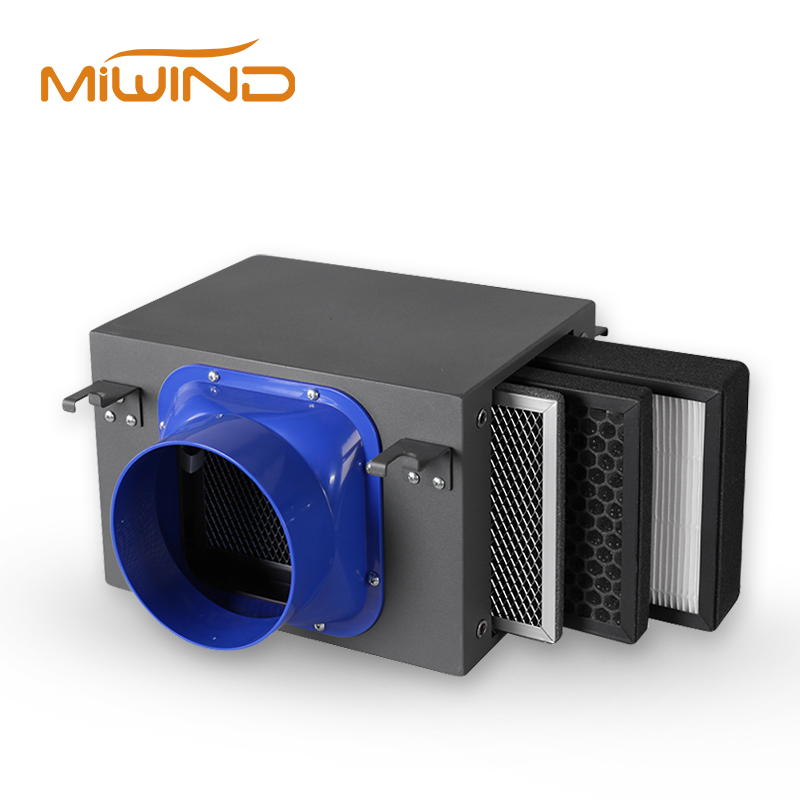
The MIWIND air filter box range uses a three-stage arrangement that targets different contaminants:
- G4 pre-filtration: captures larger dust and particles before they load the finer stages.
- Activated carbon composite filtration: supports odor reduction and air treatment where smell control is required.
- H13 high-efficiency filtration: provides the final fine-filtration stage for projects that specify higher filtration performance.
The right combination depends on the air quality target and the available fan pressure. Ask for the pressure-loss data for the selected filter configuration before finalizing the fan size.
How to Choose an Air Filter Box for a Fresh-Air System
- Match air volume: compare the required m3/h with the model range instead of selecting by duct diameter alone.
- Check pressure loss: include the filter box and loaded-filter condition in the system pressure calculation.
- Confirm duct diameter: select a housing that matches the round duct connection or use a properly designed transition.
- Plan service access: leave enough space to remove and replace the filter without dismantling the duct.
- Define the filter grade: confirm whether the project needs pre-filtration only, odor control, H13 filtration or a combination.
Where Air Filter Boxes Are Used
HVAC air filter boxes are useful at outdoor-air intakes, fresh-air units, inline duct branches, workshops, offices, retail spaces and other locations where incoming air needs controlled filtration before it reaches occupied areas or equipment. For a complete duct-fan selection, compare the box with the MIWIND fresh-air system range and the required fan pressure.
Air Filter Box vs. Car Airbox
An automotive airbox is designed around engine intake, combustion airflow and vehicle packaging. An HVAC air filter box is designed around building airflow, filter stages, pressure drop and service access. The names are similar, but the specifications are not interchangeable. For a building or duct project, use HVAC air volume, filter grade and pressure-loss data when comparing options.
Maintenance and Filter Replacement
Inspect the housing and seals at each filter change. Replace the filter when the measured pressure drop reaches the project limit or when the filter is visibly loaded, and check that the replacement media is seated correctly. Keeping the filter clean helps the fan maintain its design airflow and prevents avoidable energy use.
Choose the Right MIWIND Air Filter Box
Review the MIWIND H13 air filter box product page for model ranges and filter stages. For a project quotation, send the target air volume, duct diameter, required filtration grade, installation space and expected quantity through the MIWIND contact form.