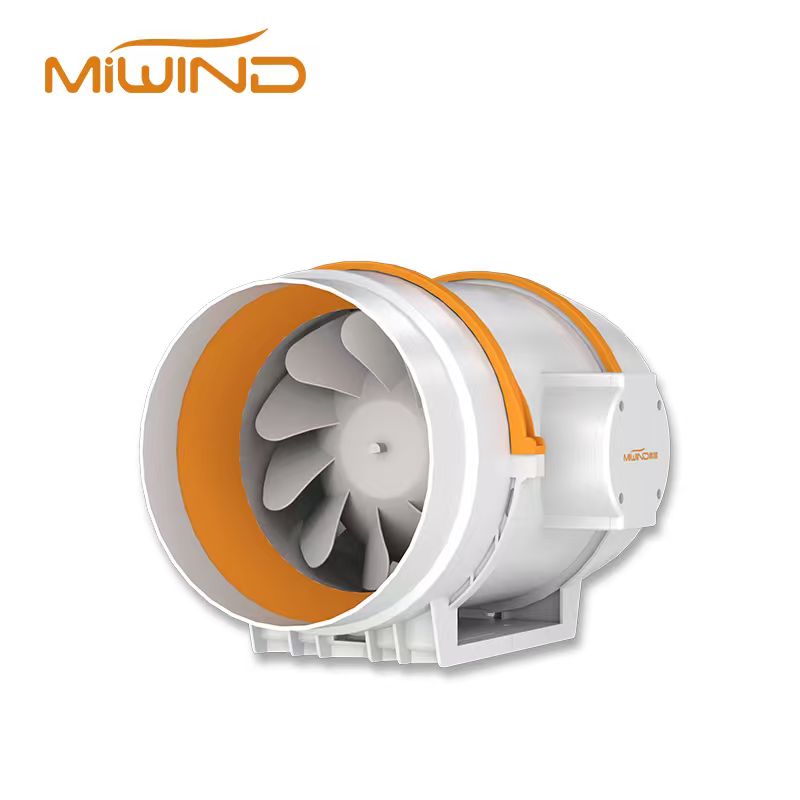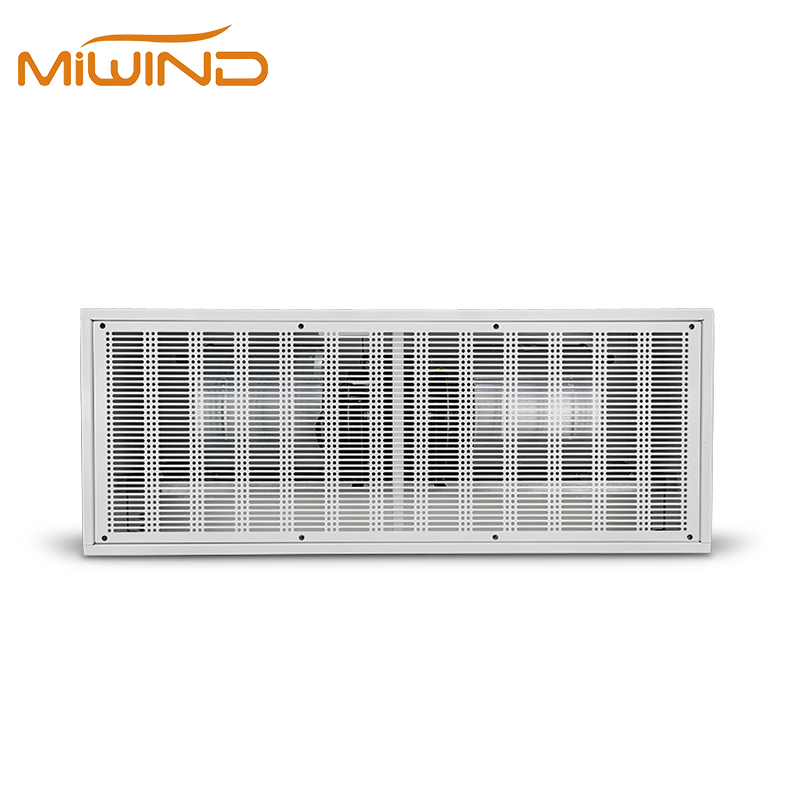
Ventilation fans and exhaust fans both move air, but they solve different airflow problems. An exhaust fan removes stale, humid or contaminated air from a room. A ventilation fan is a broader system choice that can supply fresh air, circulate air or combine supply and exhaust paths through ductwork.
Quick Comparison: Ventilation Fan vs Exhaust Fan
| Selection point | Exhaust fan | Ventilation fan or fresh-air system |
|---|---|---|
| Airflow direction | Usually extracts indoor air and discharges it outside. | Can supply fresh air, circulate air or balance supply and exhaust. |
| Primary purpose | Remove moisture, odors, smoke or process air. | Improve air exchange, distribution and pressure balance. |
| Typical locations | Bathrooms, kitchens, workshops and point-source exhaust. | Fresh-air ducts, offices, warehouses, factories and whole-building systems. |
| Main sizing inputs | Room volume, contaminant source, duct route and discharge point. | Air changes, supply volume, static pressure, duct branches and noise limits. |
What Is an Exhaust Fan?
An exhaust fan pulls air from a defined space and sends it through a grille or duct to the outside. It is useful when the immediate problem is moisture, odor, smoke or heat in one room or process area. Common examples include bathroom exhaust, kitchen exhaust and industrial source-capture ventilation.
Review the MIWIND exhaust fan range when the project needs point-source removal. Check the discharge route, backdraft protection, make-up air and the pressure required by the duct system.
What Is a Ventilation Fan?
A ventilation fan supports air exchange or air distribution across a room, duct branch or building. Depending on the system, it may introduce outdoor air, move air between zones or work with a separate exhaust path. Inline duct fans and mixed-flow fans are often used when the fan must overcome a long duct run or several bends.
For supply-air and ducted projects, compare the MIWIND fresh-air system range with the target air volume, static pressure and duct diameter.
Key Difference: Airflow Direction and System Purpose
The simplest distinction is direction: an exhaust fan takes air out, while a ventilation system manages air exchange. In practice, a project can use both. For example, a commercial kitchen may need source exhaust at the hood and make-up air elsewhere so the building does not operate under excessive negative pressure.
Which Fan Should You Choose?
- Choose an exhaust fan when the priority is removing moisture, odor, smoke or contaminated air from a defined source.
- Choose a ventilation or inline duct fan when the priority is supplying fresh air, distributing air or overcoming a long duct run.
- Use a coordinated system when the project needs both extraction and make-up air, especially in kitchens, warehouses and commercial buildings.
- Check static pressure before selecting by free-air airflow alone. Filters, grilles, bends and long ducts reduce delivered airflow.
- Check noise and controls for occupied spaces, and confirm whether variable speed or two-speed operation is required.
Common Applications
Bathrooms and kitchens commonly use exhaust fans for moisture and odor removal. Warehouses, workshops and offices may need a fresh-air or duct-fan system for balanced air exchange. Retail and food-service projects often need both approaches, with extraction at the source and controlled replacement air for comfort.
Final Selection Checklist
Before ordering, record the room or process volume, target air volume, duct diameter, duct length, number of bends, filter or grille resistance, noise limit and operating schedule. These inputs make it possible to choose a fan for the actual system rather than a headline free-air rating.
For a project recommendation, send the airflow target and duct layout through the MIWIND contact form.