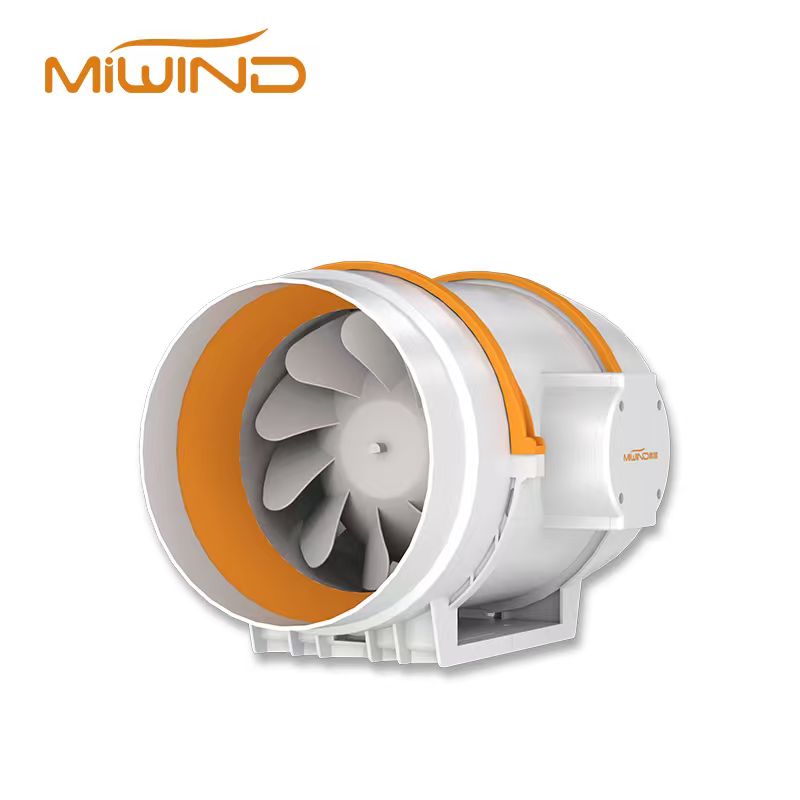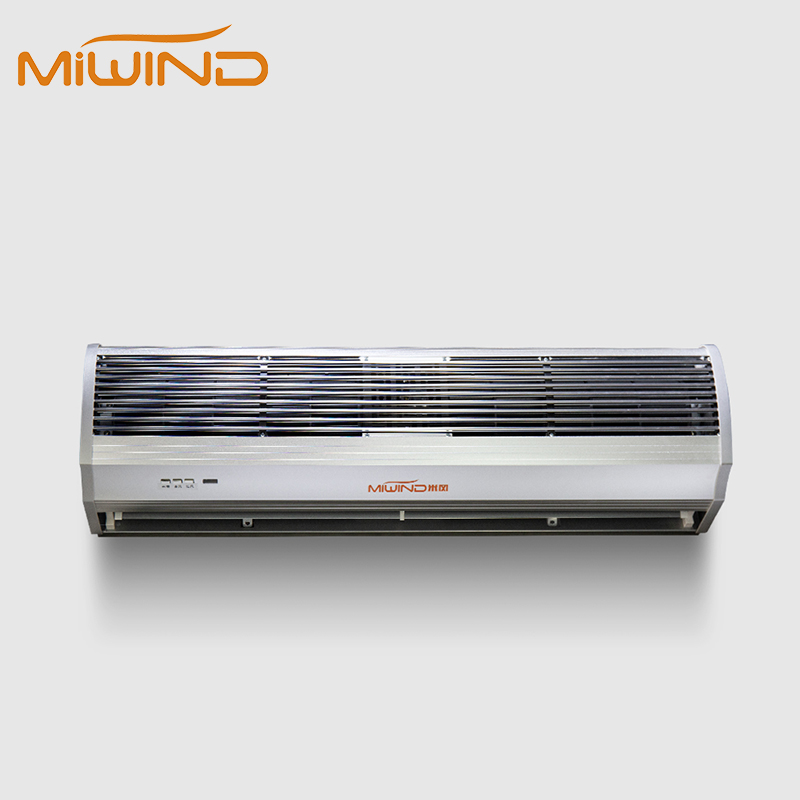
A warehouse dock door air curtain does a different job than one installed at a storefront. Dock doors see forklift traffic, pallet staging, open truck bays, dust carried in from the yard, exhaust from idling trucks, wind gusts across the apron, insect pressure, and doors held open for the length of a loading cycle. Any airflow solution here has to hold a seal without ever becoming a physical obstruction that a forklift operator has to work around.
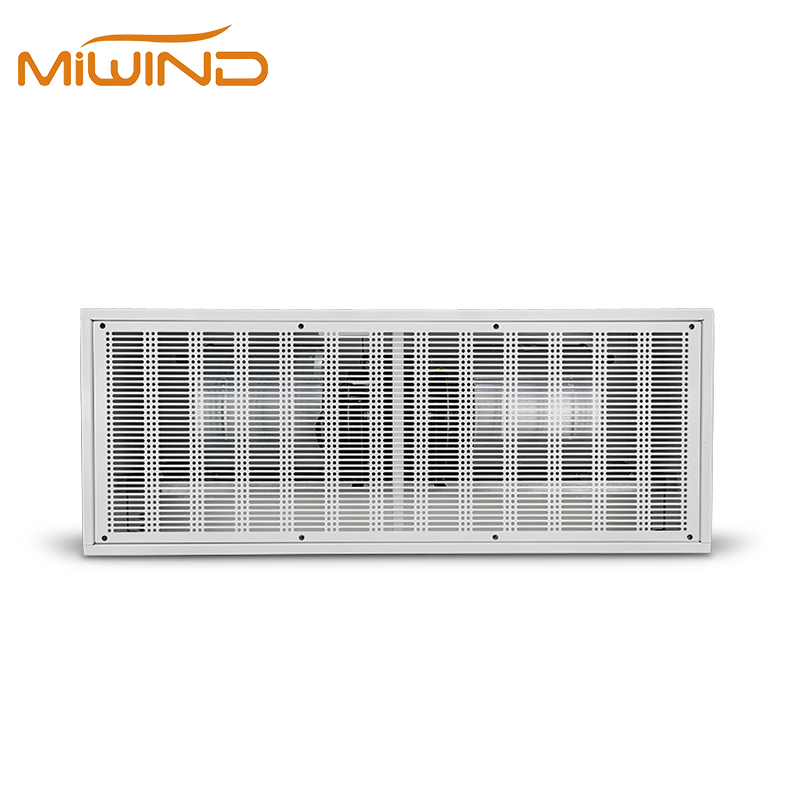
This guide is written for one purpose: helping a facilities or logistics buyer prepare a dock-door inquiry that MIWIND's engineering team can actually size correctly on the first pass. It stays focused on active loading and unloading conditions rather than general air curtain use cases. Send the details below and MIWIND can match the opening to the right model in the Air Curtain Series, positioned within the Industrial Series solution.
Why Loading Dock Doors Need a Different Airflow Plan
A dock door isn't a doorway people walk through — it's a working opening. Trailers back into position, dock levelers cycle up and down, forklifts cross the threshold dozens of times an hour, pallets sit staged right at the edge of the opening, and the door itself may stay open for the full duration of a load-out. That operating pattern stacks several pressure points on top of each other at once.
| Dock-door pressure point | Why it matters |
|---|---|
| Long open time | Extended dwell time during loading lets more outdoor air migrate into the building. |
| Forklift and pallet traffic | Any physical barrier in the opening slows cycle time and blocks operator sightlines. |
| Wind and pressure | Air still moves through a partially open dock door under wind load or building pressure differential. |
| Dust and debris | Yard dust and vehicle debris track into staging and storage zones. |
| Exhaust and odors | Idling trucks and nearby traffic lanes pull exhaust into the receiving area. |
| Insects | Food, packaging, and cold-chain sites need an entry-control layer at the opening. |
| Temperature swings | Conditioned warehouses lose thermal stability every time a dock door sits open. |
Industry references such as Mars Air's material-handling page and Powered Aire's manufacturing and warehouse application page confirm the same operating logic — loading doors, industrial openings, and continuous workflow access all demand a different design approach than a retail entrance. Their published airflow figures and product limits are specific to their own equipment, so they're referenced here only as market context, not as MIWIND performance data.
The takeaway for a buyer preparing an RFQ: describe how the dock door is used during a shift, not just its dimensions. Traffic pattern and open-time behavior drive the sizing conversation as much as door width does.
How an Air Curtain Works During Loading
An air curtain generates a directed air stream across the full width of the opening. At a dock door, that stream is engineered to resist air exchange while keeping the opening completely clear for movement. Forklifts, pallet jacks, hand carts, and dock workers pass through unobstructed because the separation is air, not a strip curtain or a solid leaf.
This is exactly why warehouse operators end up comparing air curtains against strip curtains, high-speed doors, and dock-sealing equipment — each addresses a different slice of the same problem. A strip curtain blocks the opening physically but can catch on pallet loads or block an operator's view. A high-speed door cuts open time, but only if the workflow actually allows the door to close between movements. A dock seal manages the gap at the trailer-to-building interface. An air curtain is the layer that stays active specifically while the door is open and traffic is moving through it.
For buyers evaluating certified performance claims, AMCA's air curtain certification listing is a useful independent reference point. Any certification or rated-performance claim tied to a specific MIWIND model should be confirmed against that model's current test documentation before it's quoted to a customer.
What a Dock Door Air Curtain Can Help Control
Properly sized and mounted, a dock door air curtain contributes to controlling:
- Outdoor air infiltration into a conditioned warehouse.
- Warm or cold air transfer at the loading bay opening.
- Flying insects entering through an open industrial door.
- Dust and loose debris carried in from the yard or vehicle lanes.
- Odor and exhaust migration near shipping and receiving zones.
- Comfort complaints from staff stationed near an open dock.
Performance claims here need to stay grounded. An air curtain helps reduce these types of intrusion — it isn't a sealed barrier against insects, dust, exhaust, or temperature loss on its own. Dock-door performance is shaped by wind load, building pressure, door-cycle discipline, and forklift movement patterns specific to that site. A warehouse running under negative pressure can pull the air stream inward rather than letting it hold across the opening. A corner dock exposed to crosswind can see the stream bend off-target. And on doors held open for extended load-out windows, the air curtain functions as one component of a broader dock strategy rather than a standalone fix.
Where negative building pressure is suspected, describe exhaust fan locations, any opposite doors left open, and roof ventilation in the RFQ so MIWIND's team can factor that into the sizing review.
Why Forklift and Pallet Traffic Change the Decision
Warehouse equipment introduces mounting constraints that a storefront installation never has to deal with. A unit may need to clear a tall sectional door, sit beside overhead sensors or sprinkler lines, or work around signage and dock lighting fixtures. The door type itself — sectional, roll-up, or high-speed — also determines what mounting position is even physically available.
A generic request for "one industrial air curtain" doesn't give MIWIND enough to size correctly. A dock-door schedule with the fields below gets a much more accurate quote:
| Field | What to send |
|---|---|
| Door width and height | Measure the clear opening, not the door panel dimensions. |
| Mounting height | Note header clearance and any overhead obstructions. |
| Door type | Sectional, roll-up, high-speed, sliding, or other. |
| Dock count | Number of matching doors, plus any exceptions. |
| Forklift traffic | Frequency, peak loading hours, pallet height, direction of travel. |
| Door open time | Short cycling, extended held-open periods, or a mix of both. |
| Environmental issue | Outdoor air, insects, dust, exhaust, heat, cold, or a combination. |
| Pressure symptoms | Inward drafts, doors that resist closing, nearby exhaust fans. |
| Electrical needs | Voltage, control preference, door-interlock switch, or continuous run. |
| Photos | Front view, side view, header area, exterior yard, adjacent equipment. |
This level of detail lets MIWIND treat repeated dock positions as a standard spec and flag exceptions separately. A distribution center with twenty near-identical dock doors and one corner position exposed to prevailing wind needs two different conversations, not one blanket spec applied across the board.
MIWIND Product and Solution Path
For warehouse dock doors, the primary product line to review is the MIWIND Air Curtain Series, which spans industrial, commercial, heated, and high-velocity configurations without locking a buyer into a single unverified spec too early.
The Industrial Series solution page is the right internal reference point from there — it maps warehouse, factory, and large-industrial-door airflow challenges (dust, insect pressure, outdoor air infiltration) directly to product selection criteria.
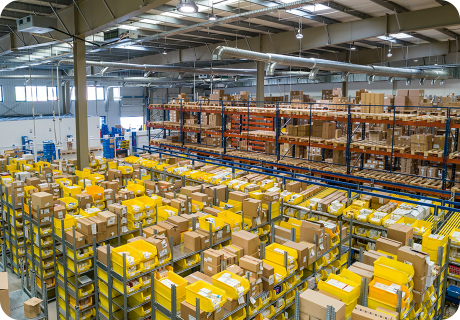
For a real-world reference, the Warehouse Industrial Door Project case, based on a deployment at the Harbin Comprehensive Bonded Zone, documents actual dock-door airflow management in a working warehouse. Treat it as a site-condition reference, not as a benchmark for cold-storage performance, energy savings, or insect-control metrics — those require separate, verified test data.
When to Combine with Seals, Doors, or Ventilation
Most dock doors end up needing more than one control layer working together.
Dock seals or shelters close the gap at the trailer-to-building interface. High-speed doors cut open time when the workflow allows the door to close between forklift cycles. Ventilation or make-up air corrects situations where exhaust fans or a building-wide pressure imbalance are actively pulling air through the dock. An air curtain covers the piece none of those solve on their own: the opening itself, while traffic is actively moving through it.
For a side-by-side comparison, see Loading Dock Energy Loss: Air Curtains, Dock Seals, and High-Speed Doors Compared. For sites where frost, fog, and ice at a refrigeration transition zone are the dominant issue, see Cold Storage Door Air Curtains instead.
Rather than defaulting to every available layer, match the fix to the variable actually causing the problem: trailer gaps point to dock seals, excessive open time points to faster doors and better operating discipline, air exchange during active loading points to an air curtain, and building-wide pressure imbalance points to a ventilation review.
RFQ Checklist for MIWIND
Submit sizing requests through Contact Us or the inquiry form, and include:
- Door width, clear height, and mounting height.
- Header clearance, ceiling obstructions, and side clearance.
- Number of dock positions and which doors are identical.
- Door type, and whether a high-speed door or other dock equipment is already installed.
- Forklift, pallet, and pedestrian traffic patterns.
- Typical loading hours and held-open durations.
- Indoor and outdoor temperature range for the site.
- Dust, insect, exhaust, odor, or comfort complaints reported on-site.
- Wind exposure, pressure symptoms, and any opposite doors left open.
- Voltage, control preference, document requirements, and site photos.
If the project involves food storage, cold chain, or strict hygiene requirements, flag that in the first message. MIWIND's team will determine whether the standard industrial-door review applies or whether the project needs to move toward cold-storage and sanitation-specific specs.
FAQ
Do warehouse dock door air curtains block forklift or pallet traffic?
No — there's no physical curtain in the opening, so forklifts and pallets move through freely. Whether the air stream actually performs well in that traffic pattern still comes down to door size, mounting position, and how the airflow is aimed relative to equipment movement.
Can one air curtain reduce insects, dust, exhaust, and temperature swings at the same time?
A single unit can help with several of these simultaneously, but each has its own limiting factors. Insect control often needs sanitation practices alongside the air curtain; exhaust and temperature transfer often tie back to building pressure balance and door-cycle discipline as much as airflow strength.
What dock door measurements are needed before quotation?
Send clear opening width and height, mounting height, header clearance, door type, traffic pattern, power supply, and site photos. If multiple dock doors are near-identical, group them in one spec, but flag any wind-exposed or high-traffic exceptions separately.
When should dock seals or high-speed doors be added alongside an air curtain?
Add dock seals or shelters when the trailer-to-building gap is the main issue. Consider a high-speed door when excessive open time is driving the problem. Use an air curtain to manage air exchange while the door is actively open and traffic is moving through it.
Next Step
Request dock-door sizing through Contact Us. Send the completed dock-door schedule, site photos, loading workflow details, reported symptoms, and electrical requirements — that's what lets MIWIND recommend the right air curtain configuration instead of estimating from door dimensions alone.