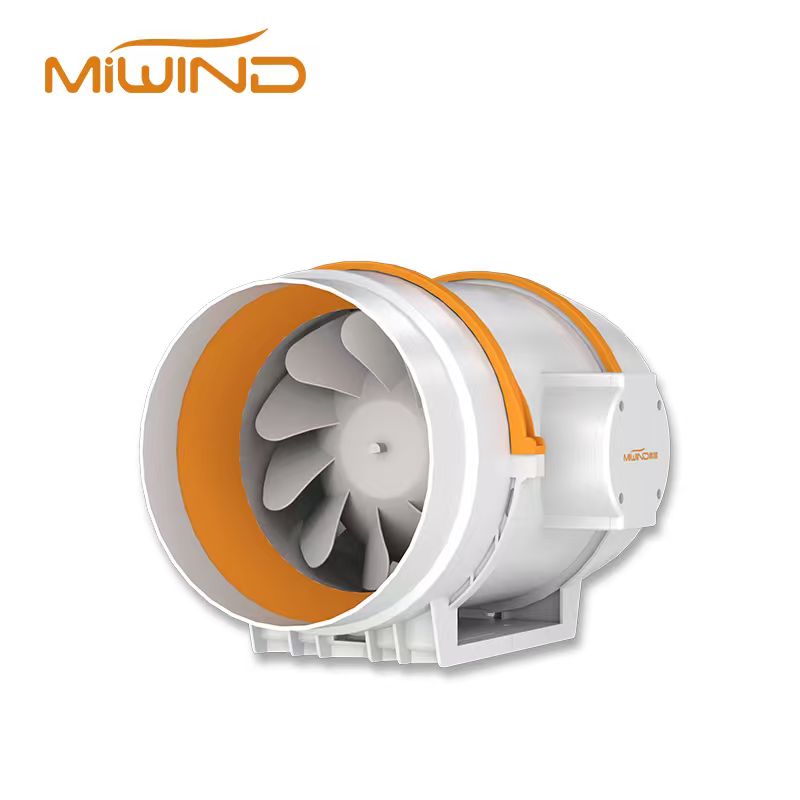
Source capture ventilation means pulling heat, moisture, fumes, smoke, dust, or odor out of the air right where it's produced, before it has a chance to spread into the room. For B2B exhaust fan buyers, this distinction matters more than it first appears: a fan alone rarely fixes a capture problem. The hood or inlet, duct run, make-up air supply, and discharge point all determine whether a system will actually pass a real project review.
This guide is written for OEM buyers, distributors, MEP engineers, EHS reviewers, kitchen managers, workshop supervisors, factory maintenance teams, and contractors who are putting together a source-control inquiry. MIWIND can help route a source-capture project review, walk through commercial and industrial exhaust fan products, compare exhaust fan applications, or take project details through Contact Us.
Use this guide early in the buying process — to frame the problem, gather the right project inputs, and keep fan selection separate from hood design, code review, and exposure control. Any claims about contaminant removal, IAQ improvement, odor control, worker safety, or compliance still depend on model-specific data and a qualified project review, not on this article alone.
Source Capture Ventilation Definition
Local capture places an inlet close to the contaminant or heat source. Rather than letting the whole room mix and dilute the unwanted air, the system collects it right at the process, hood, appliance, or workstation where it originates.
This distinction isn't unique to MIWIND — it shows up consistently across industry references. OSHA's industrial ventilation chapter, the CCOHS ventilation introduction, and CCOHS hood guidance all treat local exhaust and source capture as system-level concepts, not just fan-shopping terminology.
The practical takeaway for MIWIND buyers: an exhaust fan inquiry should describe the source and the airflow path, not just the fan diameter or a price target.
Source Capture vs Dilution Ventilation
Dilution ventilation works by introducing or circulating air to lower concentration across a larger room. Source capture, by contrast, works closer to the point where contaminants form. Both approaches can appear on the same project, but they solve different problems.
| Question | Source capture approach | Dilution or general ventilation approach |
|---|---|---|
| Main goal | Collect unwanted air near the source. | Mix or replace room air. |
| Buyer input | Source, hood or inlet, duct path, fan, discharge. | Room size, occupancy, outdoor air, general airflow. |
| Common risk | Hood too far from source, or capture path disturbed. | Contaminants spread before dilution takes effect. |
| MIWIND role | Exhaust fan product path, once system inputs are clear. | Fresh-air or general ventilation path, when applicable. |
The EPA's IAQ guidance is worth keeping in mind here for a broader reason: source control, ventilation, and air cleaning often work together. No single exhaust fan should be expected to solve every indoor air quality concern on its own.
Main System Parts: Hood or Inlet, Duct, Fan, Filter, and Discharge
Why the hood or inlet comes before fan selection
The hood, inlet, pickup point, or local extraction point determines what the system can actually collect. If that inlet sits too far from the source, gets blocked by the operator's body, or is disturbed by cross-drafts, a bigger fan won't fix the underlying issue — it just moves more air past the wrong spot.
That's also why this guide connects naturally to the more detailed local exhaust design checklist, which walks through hood placement, capture velocity, and airflow path as concrete buyer inputs rather than abstract theory.
Why the exhaust fan is only one part of the system
The fan supplies the driving force, but the real-world result depends on the hood, duct run, fittings, any filter or air-cleaning element, discharge point, make-up air, controls, and how the whole thing gets commissioned and maintained. A fan quote that skips over those pieces might be quick to send, but it's hard to defend once the system is installed and underperforming.
MIWIND's commercial and industrial exhaust fan products and exhaust fan applications come into the conversation after the buyer has described the system — not as a stand-in for hood design, filtration, code approval, or a contaminant-removal guarantee.
Common Applications in Kitchens, Workshops, and Factories
Source capture projects typically show up in:
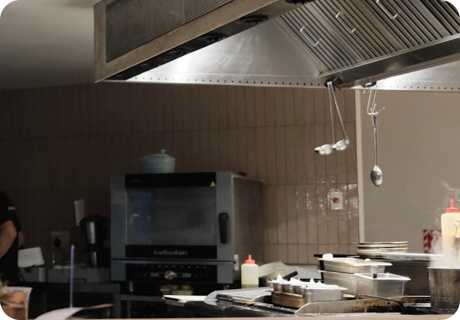
- Commercial kitchens, where hood, duct, exhaust fan, and make-up air all need to work together.
- Workshops dealing with localized dust, fumes, heat, or odor from a specific process.
- Factories with production equipment, benches, cabinets, or dedicated process stations.
- Public or commercial buildings that need targeted exhaust rather than general ventilation.
- Retrofit projects where an existing general fan simply isn't solving the actual source problem.
For a sense of how established suppliers frame this, Greenheck's restaurant page presents kitchen ventilation as a full system — hoods, exhaust, make-up air, and controls together. That kind of layout is a useful reference when organizing your own documents and questions ahead of a quote.
Inputs a Supplier Needs Before Quoting an Exhaust Fan
Before requesting a fan quote, it helps to have the following ready:
- Application type — kitchen, workshop, factory, public space, cabinet, or other.
- Source description — heat, moisture, dust, odor, smoke, fume, or general exhaust.
- Hood or inlet photos, a sketch, distance from the source, and opening size if available.
- Duct path, duct size, elbows, branches, filters, dampers, and discharge point.
- Room layout, and whether workers, equipment, doors, or supply air might disturb the capture path.
- Existing fan details, product preference, operating schedule, and control needs.
- Make-up air availability and any known pressure symptoms.
- Whether professional, code, EHS, or insurance review is already part of the project.
For kitchen-specific sizing data, see commercial kitchen exhaust fan sizing. This guide stays intentionally broader, covering source, hood, duct, and discharge planning across applications.
Make-Up Air, Discharge, and Re-Entry Checks
Every exhaust system removes air — and that air has to be replaced from somewhere. When make-up air is missing or poorly located, capture performance weakens, doors get harder to open, and unwanted air can drift across the room before it ever reaches the hood.
Discharge placement matters just as much. Exhaust shouldn't create re-entry problems, neighbor complaints, roof damage, or worker exposure near an intake. ASHRAE Standards 62.1 and 62.2 offer useful context for framing this part of the review — though they're a starting point for discussion with your project team, not a substitute for it.
For more on the replacement-air side specifically, see make-up air for exhaust balance. This guide keeps the broader system definition in view.
When Professional Design or Code Review Is Required
Bring in qualified review whenever the source involves grease-laden kitchen exhaust, fire risk, smoke control, hazardous dust, chemical or welding fumes, corrosive air, explosive atmospheres, worker exposure limits, or life-safety ventilation. In these cases, the goal of this article is to point you toward the right review process — not to substitute for it.
From MIWIND's side, the practical next step is gathering project data, identifying which exhaust products fit the discussion, and confirming what documentation your reviewer will need. The engineering, industrial hygiene, fire, safety, or code authority decision stays with your qualified project team.
FAQ
Does source capture mean I just need an exhaust fan?
Not quite. The fan is one piece of the system. The source, hood or inlet, duct, any filter or air cleaner, discharge point, make-up air, controls, and ongoing maintenance all play a role in whether the system actually works.
Should I always choose source capture over dilution ventilation?
It depends on your source, contaminant type, process, room layout, and where the operator stands. Source capture tends to work better when air can be collected close to where it's generated — but for anything involving health or safety risk, a professional review should confirm the approach.
Can MIWIND sign off on my hood or safety design based on this article?
No — this article helps frame the conversation and gather project inputs. Hood design approval, code review, worker exposure control, fire safety, and hazardous exhaust decisions need qualified review and project-specific documentation, separate from any product discussion.
Next Step: Request a Source Capture Review
Request a source capture review once you've gathered the application type, source description, hood or inlet photos, duct path, discharge location, room layout, operator position, make-up air notes, existing fan details, operating schedule, control needs, and current review status.