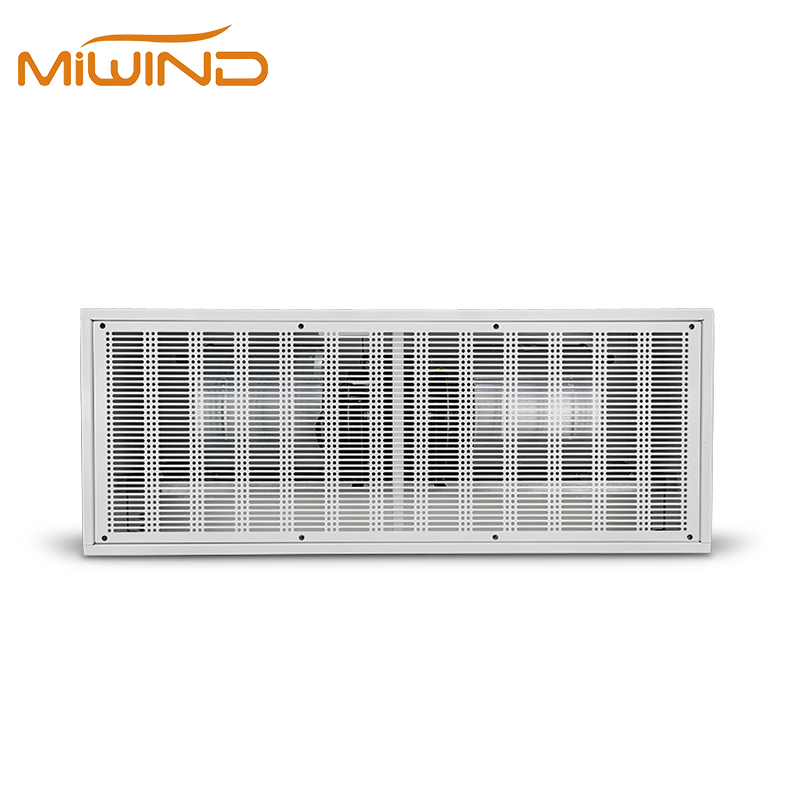
Why use an air curtain? Quick answer: it creates a controlled air stream across an open doorway to reduce the exchange of conditioned indoor air with outdoor air, while allowing people, carts and goods to pass without closing the opening. It works best when the unit covers the opening, the discharge reaches the floor and cross-wind or building pressure is within the selected model's capability.
What an Air Curtain Does
An air curtain is a fan unit installed above or beside an entrance. It blows air across the opening to reduce direct air movement through the doorway. It does not create a sealed wall and it does not replace a door when the project needs security, acoustic separation, fire separation or strict temperature control.
Air Curtain Benefits and Limits
| Project goal | How an air curtain can help | Limit to check |
|---|---|---|
| Temperature separation | Reduces the volume of conditioned air directly exchanged at an open entrance. | Strong wind, a tall opening or high building pressure can push the air stream aside. |
| Open-door traffic | Allows people, carts and deliveries to move through without repeatedly opening a door. | The unit must run during the traffic period and cover the complete opening. |
| Dust and insects | Creates an air barrier that can reduce the entry path for some airborne dust and flying insects. | It is not a hygiene seal and cannot compensate for an open process or poor housekeeping. |
| Comfort near entrances | Reduces the sensation of a direct draft for people near the threshold. | Noise, discharge velocity and the local wind direction still affect comfort. |
Where an Air Curtain Helps Most
Air curtains are useful at retail entrances, supermarkets, restaurants, warehouses, workshops, loading areas and service doors where the opening is used frequently. They can also support temperature separation at chilled or conditioned areas when the equipment is selected for the temperature difference and the operating environment.
Start with the doorway dimensions and traffic pattern. The MIWIND air curtain range can then be compared by opening coverage, airflow, pressure, heating option, sound and control method.
When an Air Curtain Will Not Work Well
An air curtain will not work well when it is shorter than the doorway, mounted too high, blocked by a sign or beam, or selected without considering wind and pressure. It is also a poor substitute for a physical door where the project requires security, fire protection, acoustic control or a reliably closed envelope. A vestibule, strip curtain, automatic door, building-pressure correction or a different entrance layout may be needed instead.
Air Curtain Versus a Physical Door
| Requirement | Air curtain | Door or vestibule |
|---|---|---|
| Continuous open traffic | Good fit when people and goods need a clear opening. | May slow traffic unless automated and correctly sized. |
| Security and access control | Does not provide a physical barrier. | Provides a controlled physical separation. |
| Noise and airtightness | Fan sound and air leakage depend on operation and conditions. | Can provide stronger acoustic and air separation when closed. |
| Installation space | Needs mounting, power and service access above or beside the opening. | Needs door hardware, swing or sliding clearance and structural work. |
Selection and Installation Checks
- Measure the clear doorway width and height, including the highest point that must be covered.
- Check wind, cross-drafts, indoor pressure, door frequency and nearby exhaust or supply fans.
- Choose the heating option only when the temperature and comfort requirements justify it.
- Leave service access and keep the intake and discharge free of signs, lights and structural obstructions.
- Commission the air stream with the door open and normal traffic so gaps and deflection are visible.
Send the Entrance Details
For a model recommendation, send the clear opening width and height, location, indoor and outdoor conditions, traffic schedule, wind exposure and expected quantity through the MIWIND contact form.