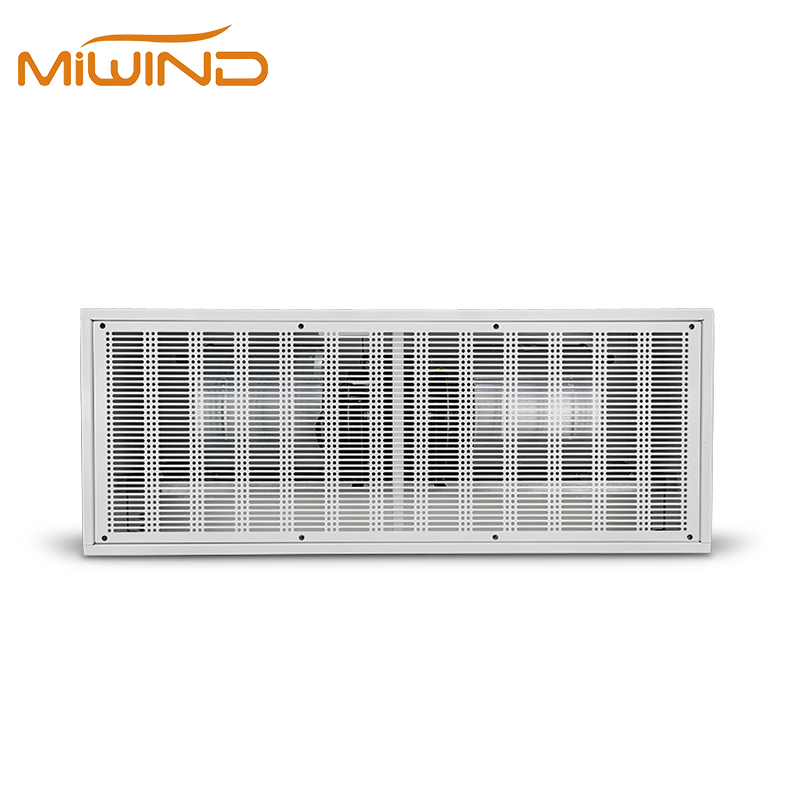
Residential air curtain for doors: quick answer: it can reduce the direct exchange of indoor and outdoor air while a front, patio or service door stays open. It is most useful when the unit covers the opening, the discharge reaches the threshold and wind or building pressure is within the model's capability. It is not an airtight barrier and it does not replace a physical door where security, fire separation or acoustic control is required.
Six Practical Benefits
| Benefit | What it can do | Condition to verify |
|---|---|---|
| Open-door comfort | Reduces the sensation of a direct draft when people move through a frequently used entrance. | Choose the airflow for the clear opening and local wind exposure. |
| Less direct air exchange | Helps separate conditioned indoor air from outdoor air while the door is open. | It can reduce exchange, but it does not seal the doorway or guarantee a fixed energy saving. |
| Insect and dust reduction | The moving air stream can make it harder for some flying insects and airborne dust to pass through the opening. | It is not a hygiene seal and cannot correct an open process or poor housekeeping. |
| Flexible traffic | People, carts and deliveries can pass without repeatedly closing a hinged or sliding door. | Use a switch, sensor, timer or building control that matches the traffic schedule. |
| Seasonal comfort | Reduces the direct impact of hot or cold outdoor air at the threshold. | A heated model adds electrical and safety requirements; an unheated model only separates air. |
| Compact entrance upgrade | Can be installed above a suitable doorway without adding a floor track or door swing. | Reserve structural support, power and service access above the opening. |
Where a Residential Air Curtain Makes Sense
Common use cases include a frequently opened front entrance, a patio or terrace door, a workshop entrance connected to a home, and a small shop or service counter. Start with the clear opening rather than the product name. Record the width, height, indoor and outdoor conditions, traffic, nearby exhaust fans and the available power.
Review the MIWIND air curtain range and compare the opening conditions with models such as the D-series air curtain before choosing a unit.
When a Residential Air Curtain Is Not Enough
A residential air curtain is not enough when the opening is exposed to strong cross-wind, the unit is shorter than the doorway, the mounting height is excessive or an exhaust fan creates a large pressure imbalance. It is also the wrong primary solution when the project needs access control, fire separation, strong acoustic isolation, weather-tightness or a reliably closed envelope. A physical door, vestibule, strip curtain, pressure correction or a different entrance layout may be needed.
How to Size and Position It
- Measure doorway width and height: use the clear opening at the highest point that needs coverage.
- Check the air path: keep signs, lights, beams and door hardware away from the intake and discharge.
- Match airflow to the site: consider wind, pressure, traffic and the distance from the outlet to the threshold.
- Choose heating deliberately: confirm temperature, comfort and electrical capacity before selecting a heated model.
- Plan controls and service: provide isolation, a control signal and access for cleaning and inspection.
Installation and Maintenance
Fix the unit to a stable wall or frame, keep the discharge aligned with the opening and commission it with the door open during normal traffic. Check for vibration, side gaps and air-stream deflection. Keep the intake and outlet clean, inspect fasteners and review the model if the doorway, wind or traffic pattern changes.
Request a Doorway Recommendation
Send the clear width and height, door type, indoor and outdoor temperature, wind exposure, traffic pattern, heating preference, power supply and expected quantity through the MIWIND contact form.