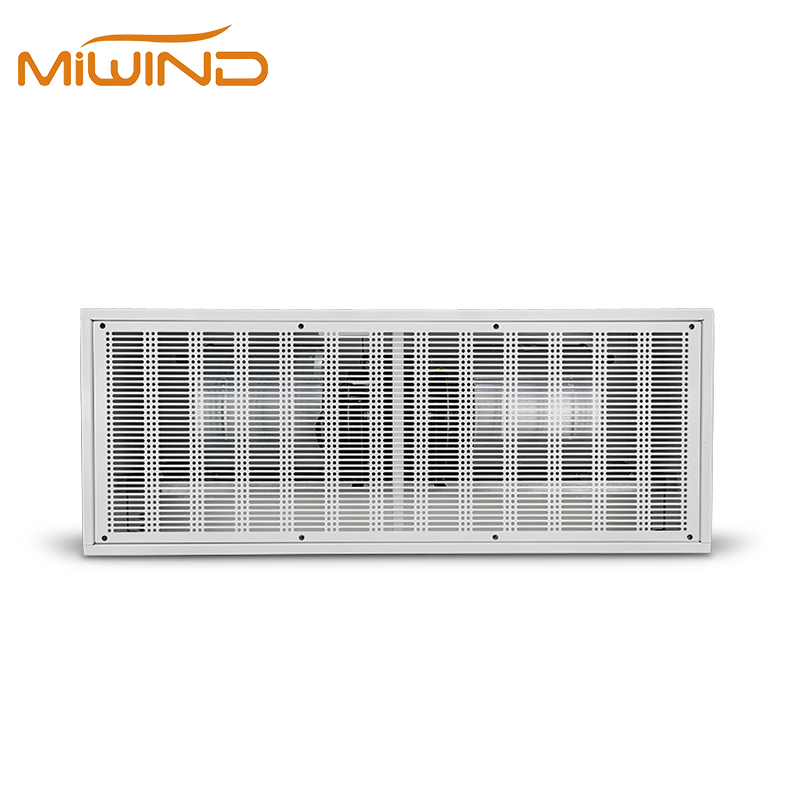
Air curtain installation works only when the unit covers the doorway and the discharge air reaches the threshold with enough velocity. Before fixing the back plate, confirm the clear opening width and height, mounting space, wall strength, power supply, control position and the direction of normal wind or cross-draft.
Air Curtain Installation Checklist
| Item | What to check | Why it matters |
|---|---|---|
| Opening width | Unit length and side coverage across the complete opening. | Gaps at either side allow air, dust and insects to bypass the barrier. |
| Mounting height | Clear distance from the top of the doorway to the floor. | The air stream must reach the threshold rather than stopping above it. |
| Wall or frame | Concrete, steel frame, masonry or another load-bearing surface. | The mounting plate must stay rigid without vibration or deflection. |
| Power and controls | Voltage, isolator, switch, sensor and cable route. | Correct wiring prevents unsafe operation and makes servicing possible. |
| Door operation | Sliding, hinged, automatic, frequently open or delivery entrance. | Traffic and door movement affect the required airflow and control logic. |
Step-by-Step Installation Method
- Measure the opening: record the clear width, height and available space above the door. Select an air curtain that covers the opening without leaving a large side gap.
- Mark the mounting position: keep the unit close to the top of the doorway and align it with the centreline. Check signs, beams, sprinklers, lights and automatic-door hardware before drilling.
- Fix the mounting plate: use suitable anchors for the wall or frame. On concrete or masonry, drill to the anchor specification and tighten the plate without distorting it.
- Hang and secure the unit: seat the body on the plate, keep the outlet facing down across the doorway and tighten every retaining screw.
- Connect power and controls: isolate the circuit before wiring. Confirm the rated voltage, protective device, switch or sensor connection and cable strain relief with a qualified electrician.
- Run a commissioning test: start the fan with the door open, check the full width of the air stream and listen for vibration, rubbing or abnormal noise.
Mounting Height, Angle and Doorway Coverage
The unit should be as close to the opening as practical. If it is mounted too high, the air stream may lose useful velocity before reaching the floor. If it is tilted or obstructed, one side of the doorway may receive less airflow. For a wide opening, use adjoining units with the smallest practical gap so the discharge remains continuous.
Do not select by width alone. Compare the opening height, airflow, outlet velocity, wind exposure and pressure conditions with the MIWIND air curtain range before ordering.
Electrical and Control Checks
Power must be isolated before the cover is opened or wiring is changed. Confirm the nameplate voltage, grounding, circuit protection and local electrical requirements. A door switch, motion sensor or timed control can reduce unnecessary run time, but the control must not stop the barrier during the operating condition it is intended to protect.
Airflow Commissioning After Installation
Test the curtain with the door open during normal traffic. Look for a continuous air stream from one side to the other and down to the threshold. If wind pushes the stream aside, if the unit does not cover the opening or if the outlet is blocked, correct the installation or revisit the model selection. Record the operating sound and control response for future maintenance.
Cold Storage and Freezer Caution
Do not place a standard air curtain inside a freezer where the motor and fan can be exposed to unsuitable temperatures. Cold-storage doors need equipment selected for the temperature difference, condensation, frost, hygiene and traffic pattern. Review the cold-storage air curtain options and confirm the installation conditions before fixing the unit.
Maintenance After Installation
Keep the intake and outlet clear, inspect fasteners and check for vibration or a change in airflow. Clean the unit according to the product instructions and verify the controls after service. For doorway dimensions, photos and expected quantity, send the project details through the MIWIND contact form.