Sweating floors, fogging doors, dripping ceilings, mold patches on cartons, rust creeping across racks — these are the symptoms operators notice first. But condensation itself only ever happens one way: moist air meets a surface that's colder than its dew point. Everything else — ventilation gaps, door traffic, process moisture, mixed-temperature zones — is just the mechanism that gets air and cold surface into contact. Fixing it starts with figuring out which mechanism is at play in your building, not with buying equipment.
Warehouse operators, EHS teams, facility engineers, and anyone running a cold-chain or mixed-temperature site will recognize the pattern: one section of the floor sweats while the rest stays dry, or a dock door fogs up every morning but nowhere else does. If that sounds familiar, MIWIND's team can walk through the solutions that apply to your layout, look at industrial dehumidifier options where moisture load is part of the picture, point you to relevant technical resources, or review your specific site through Contact Us.
One thing worth being upfront about: no article — including this one — can promise you'll eliminate condensation, remove slip risk, stop mold, or hit an exact dew point target without someone actually looking at your data. Real condensation troubleshooting needs photos, temperature and RH readings, surface conditions, and a bit of engineering judgment applied to your specific building.
Why Condensation Happens in Warehouses
Condensation is a surface problem
Condensation forms right at the surface, at the exact point where air touches something cold enough to push it past saturation. That surface could be a concrete slab, a metal roof panel, a door frame, a chilled pipe, packaging, or the product itself. This is why average room RH readings can look perfectly fine on paper while one cold corner keeps sweating — the room-wide number tells you almost nothing about what's happening at that specific surface.
Condair's page on condensation and mold lays out the moisture-and-cold-surface relationship well, and their piece on humidity and temperature explains why RH shifts as temperature changes. Both are worth reading for context — they're not MIWIND claims, just useful background on the physics involved.
It rarely happens the same way twice
Plenty of warehouses only see condensation at night, or during rainy-season loading, right after washdown, when chilled equipment kicks on, or whenever warm humid air finds its way into a cooler zone. A single walkthrough at 2pm on a dry Tuesday will miss all of that. If you're trying to prevent condensation in a warehouse, the first real step is tracking when, where, and under what conditions it actually shows up.
How Dew Point Explains Sweating Surfaces
Cold floors, ceilings, and thermal bridges
Dew point is simply the temperature at which air can't hold any more moisture — go below it and water starts coming out of the air. Any surface colder than the surrounding air's dew point becomes a candidate for condensation. In practice, that usually means thermal bridges, under-insulated roof panels, slab edges, cold dock plates, walls next to freezers, and exposed metal.
Where the condensation shows up first tells you a lot. A wet patch near a cold room points to a localized thermal bridge; droplets forming across the whole ceiling after a humid front rolls in points to something building-wide instead. Different symptom, different investigation.
Door traffic and outdoor air
Loading doors are a common entry point for humid outdoor air, and forklift traffic or doors left open just makes it worse — as does negative building pressure or a fresh-air system pulling in more moisture than it should. Dantherm's warehouse humidity page frames this well as a building-use issue as much as a climate one.
If you're also thinking about inventory protection more broadly, our guide on warehouse humidity control covers that ground. For sites storing metal parts specifically, dehumidifiers for metal storage digs into the corrosion angle.
Cold rooms, chilled equipment, and process moisture
Mixed-temperature facilities add another layer. A cold room, a chilled product line, a freezer doorway, or a refrigerated staging area all raise condensation risk the moment they're exposed to humid ambient air. And moisture doesn't only come from outside — washdown, curing, drying, and general wet cleaning can push humidity up from within the building itself.
Munters covers this well on their warehouse storage page, which ties storage protection directly to humidity control. Again, that's context for understanding the problem — not a performance claim from MIWIND.
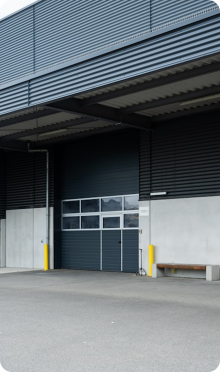
Data to Collect Before Requesting Equipment
Photos and surface details
Photograph the exact spots where condensation is happening — floor, wall, ceiling, rack, door frame, product, carton, pipe, whatever it is — and note the time, weather, and whether doors were open when you took them. A close-up and a wide shot of each location tells a much fuller story than either alone.
Here's what actually moves a review forward:
- Indoor temperature and RH near the symptom
- Outdoor temperature and RH, if you have it
- Surface type, and surface temperature if you've measured it
- Time of day when it appears
- Door opening and ventilation patterns
- Nearby cold rooms, chilled equipment, or wet processes
- Which surfaces are affected — floor, ceiling, wall, rack, carton, product
- Both close-range and wide-context photos
Trend data matters more than a snapshot
If the problem comes and goes, leave a sensor running for several days rather than relying on a single reading. What you're looking for is whether condensation tracks with nighttime temperature drops, rainy weather, door cycles, production shifts, cleaning schedules, or refrigeration cycles.
If there's already a slip hazard or safety concern, deal with that through your normal safety process right away — don't wait on the humidity review to clear a wet floor. Equipment selection shouldn't be the first response to an active hazard.
Once you understand the pattern, industrial humidity control RH targets can help define what "controlled" actually means for your space, and dehumidifier sizing connects the problem to actual moisture load and capacity.
How MIWIND Can Review the Application
By the time MIWIND gets involved, the symptom pattern and dew-point mechanics should already be roughly understood — that's what makes the conversation useful rather than speculative. From there, solutions can help frame the problem at a system level, and industrial dehumidifier options come into play wherever moisture removal is genuinely part of the fix.
Worth raising directly:
- What additional site data would actually help?
- Which product route makes sense here?
- Is this general RH, a cold-surface issue, door infiltration, process moisture, or a mixed-temperature problem?
- Which technical resources are worth reviewing first?
- What's still unverified in the current picture?
If someone's pushing for a guaranteed fix before any data's on the table, that's a sign to pause. A solid conversation about preventing condensation in a warehouse should make the root-cause hypothesis clear before anything else gets discussed.
FAQ
What causes warehouse condensation?
Condensation forms when humid air contacts a surface at or below its dew point. Cold floors, walls, ceilings, pipes, doors, chilled products, and mixed-temperature zones are the usual culprits.
Can a dehumidifier stop condensation by itself?
Sometimes — if moisture load is the main driver. But condensation often involves insulation, cold surfaces, door traffic, ventilation, air pressure, and drainage too, so a dehumidifier alone won't always solve it.
Does MIWIND guarantee condensation elimination?
No — and this article doesn't claim otherwise. Any real recommendation needs a proper site review and verified data first.
What should buyers send for review?
Photos, indoor and outdoor RH/temperature readings, timing of the symptoms, surface details, door and ventilation patterns, nearby cold rooms or wet processes, and any monitoring data you've collected.
Next Step: Share Photos and Conditions
Share your photos and site conditions — the more specific the brief, the stronger the basis MIWIND has for reviewing what's actually going on and which humidity-control options make sense for your space.