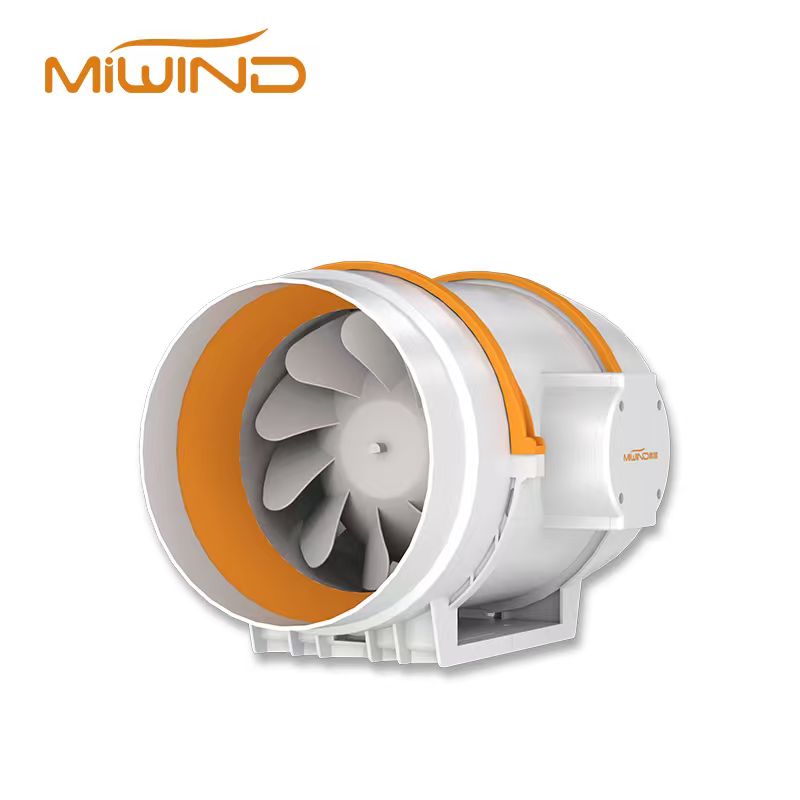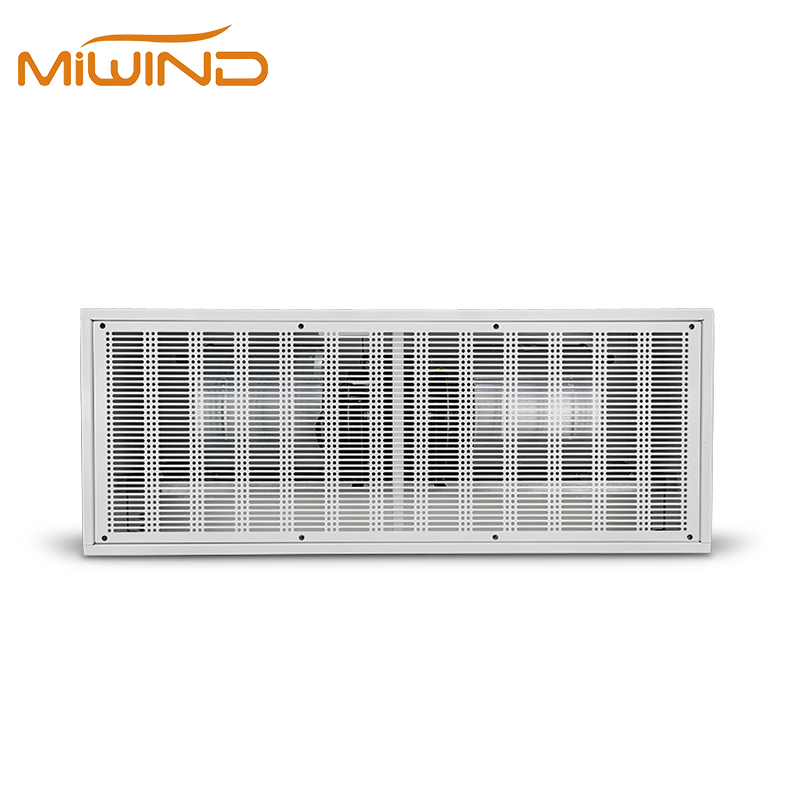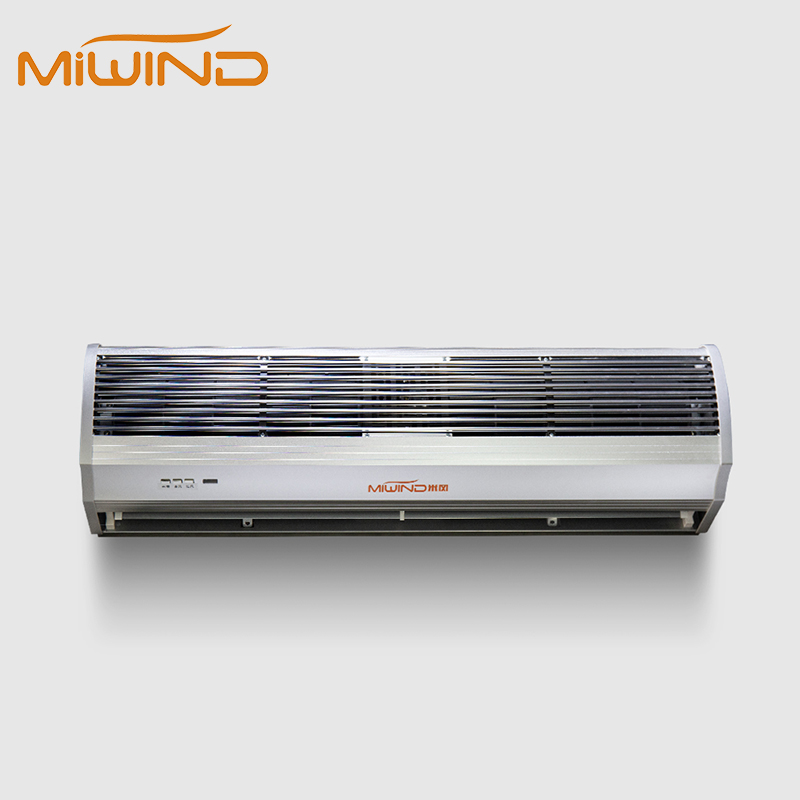
The upblast exhaust fan vs wall exhaust fan decision hinges on contaminant type, duct routing, static pressure, discharge direction, roof or wall access, serviceability, weather exposure, and any code or Authority Having Jurisdiction (AHJ) constraints tied to the project.
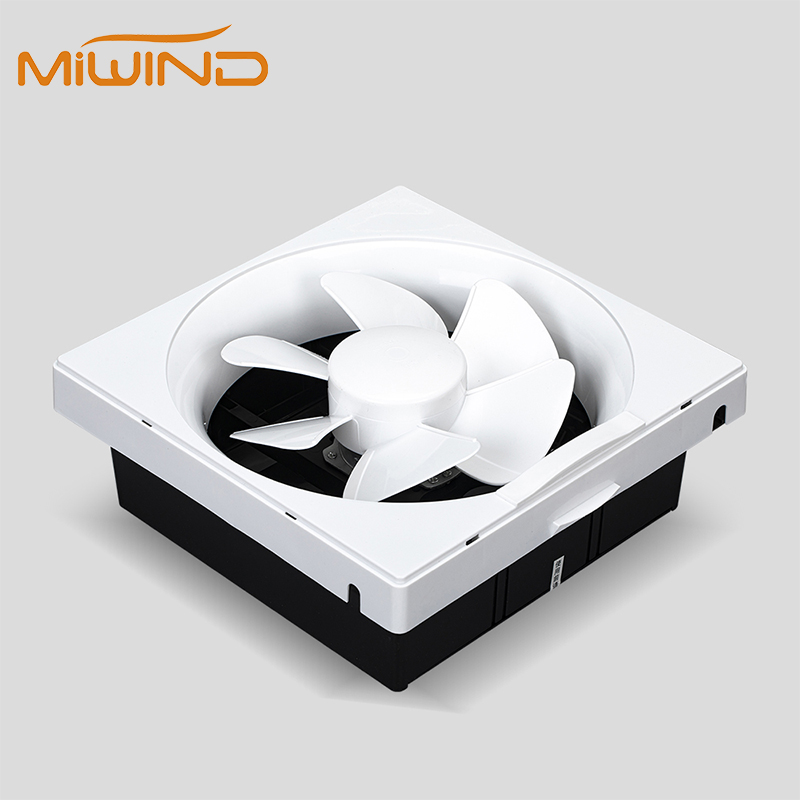
This guide supports OEM procurement teams, distributors, MEP and HVAC engineers, contractors, restaurant and facility operators, and retrofit buyers evaluating exhaust fan formats. Explore exhaust fan options, compare the exhaust fan series, route application questions through Solutions, and submit project specifics via Contact Us.
Scope note: this article does not claim MIWIND products carry grease-rated, UL/cUL 762, or NFPA 96 listings, and it does not publish MIWIND fan curves, CFM/static-pressure guarantees, noise ratings, or discharge-clearance approvals. Formal listing and AHJ approval must always come from the fan manufacturer's certification documents and the local code authority, not from this guide.
Quick Format Definitions
An upblast fan discharges vertically from a roof-mounted curb, directing exhaust upward and away from the roof surface. A wall-mounted fan discharges horizontally through an exterior wall opening. An inline fan sits mid-duct, away from either termination point. Propeller and centrifugal formats differ in how they generate airflow against static resistance, which affects which duty and pressure range each fits.
Upblast Exhaust Fans
Roof-mounted upblast fans route exhaust vertically, reducing the chance of discharge striking adjacent walls, windows, or walkways at grade level. In grease-duty applications, code bodies typically require upblast fans to be hinged, fitted with a grease drain to an accessible receptacle, and wired with flexible weatherproof cable for service access [web:2][web:9]. Before treating any fan format as acceptable for grease-laden or fire-related exhaust, confirm hood duty classification first — see Type I vs Type II kitchen hoods.
Grease and non-grease duty
Grease duty is a formal classification, not a casual label. Where grease-laden vapor, fire protection, or regulated commercial cooking ventilation is involved, code frameworks such as NFPA 96 call for listed hoods, listed grease-rated ductwork, listed fans (commonly UL 705 or UL 762), and documented AHJ sign-off before installation [web:12][web:11]. This article does not certify MIWIND fan compliance with those listings — verification must come from the manufacturer's listing documentation and the local AHJ.
Wall-Mounted Exhaust Fans
Wall-mounted fans suit buildings where the discharge run to an exterior wall is short and the surrounding wall zone is clear of intakes, operable windows, walkways, or property lines. Because discharge exits at occupant height rather than above the roofline, re-entry and clearance-to-openings checks carry more weight in a wall-mount layout than in a roof-mount layout.
The upblast exhaust fan vs wall exhaust fan comparison should therefore weigh discharge direction, re-entry risk, access for servicing, and weather exposure — not unit price alone.
Inline Exhaust Fans
Inline fans fit projects where the fan unit must sit inside the duct run itself, away from either the source or the discharge point — for example, when roof or wall termination space is constrained but mid-duct space is available. Duct length, elbow count, resulting static pressure loss, service access, and noise transmission through the duct wall all still determine whether an inline fan will perform at the required airflow.
For duct-length sizing guidance, see inline fan sizing for long duct runs. If installed airflow underperforms expectations, see low airflow troubleshooting.
Propeller vs Centrifugal Formats
Propeller-style fans move higher volumes of air efficiently against low static resistance, making them a fit for short, unobstructed discharge paths. Centrifugal fans generate more pressure per unit of airflow, which matters when the duct run includes multiple elbows, filters, or louvers that add resistance. Matching format to duty point — airflow target, static pressure, and discharge geometry — determines fan performance more than format preference alone.
For pressure-selection context, see exhaust fan CFM vs static pressure, which explains why installed airflow differs from nameplate CFM.
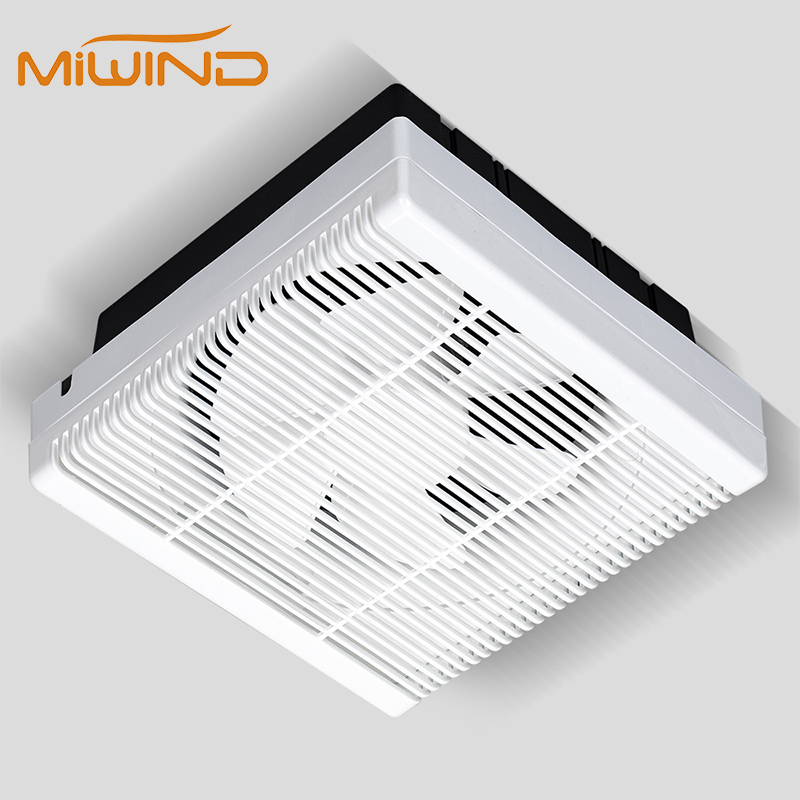
Comparison Table
| Format | Useful when | Questions to verify |
|---|---|---|
| Roof/upblast | Upward discharge and roof access are part of the project | Roof curb, access, weather, discharge clearance, cleaning, AHJ/code documents |
| Wall-mounted | Direct wall discharge is acceptable | Nearby intakes/windows/neighbors, wall access, weather, service space, discharge direction |
| Inline | Fan must sit in a duct route | Duct length, elbows, static pressure, service access, noise, support points |
| Propeller | Lower-pressure exhaust path may be acceptable | Duty, pressure, discharge, guard/louver/accessory losses |
| Centrifugal | Duct pressure or controlled discharge may be higher | Fan curve, duty point, noise, maintenance, document requirements |
Contaminant and Duct-Pressure Fit
The contaminant type drives the review path: bathroom moisture, general room exhaust, kitchen heat, workshop dust, process fumes, grease-laden air, corrosive exhaust, and hazardous exhaust each carry different construction and clearance expectations. OSHA's ventilation chapter provides useful safety context for exhaust and discharge design, and ASHRAE Standard 154 covers commercial kitchen ventilation scope. Neither reference constitutes a MIWIND compliance claim.
Discharge, Re-Entry, Access, and Code Review
For any real project, compare the following before finalizing a format:
- Discharge direction and whether exhaust could re-enter intakes, windows, doors, or neighboring spaces.
- Roof or wall service access.
- Weather exposure, vibration isolation, and maintenance expectations.
- Duct route, elbows, transitions, dampers, louvers, and cleaning access.
- Noise concerns near occupants or neighbors.
- Engineer-provided CFM and static pressure if available.
- AHJ, code, hood, fire-safety, or owner document requirements.
RFQ Checklist
Before requesting a format recommendation from MIWIND, collect:
- Contaminant type and whether the duty is grease or non-grease.
- Appliance, process, room, or source description.
- Preferred format if one is already specified.
- Roof and wall access conditions.
- Duct length, diameter, elbows, reducers, dampers, and louvers.
- Discharge direction and nearby intakes, windows, neighbors, roof surfaces, or sidewalks.
- Engineer-provided airflow and static pressure if known.
- Maintenance access, cleaning expectations, weather exposure, and noise concern.
- Voltage or power requirement if known.
- Photos, drawings, AHJ or code documents, quantity, and timeline.
This keeps the upblast exhaust fan vs wall exhaust fan decision anchored to real project constraints rather than a one-size-fits-all rule.
FAQ
Is an upblast fan always required for kitchen exhaust?
No. The requirement depends on hood duty classification, grease or non-grease conditions, duct path, discharge location, applicable listings, and AHJ review.
Are wall-mounted exhaust fans never acceptable?
No. Wall-mounted fans can be acceptable for many non-grease applications, but each must be reviewed against discharge path, contaminant type, pressure requirement, access, and local code constraints.
Can MIWIND confirm grease-rated or NFPA 96 compliance here?
No. This article does not extend a grease-rated, UL/cUL 762, or NFPA 96 compliance claim on MIWIND's behalf — confirmation must come directly from listing documentation and the local AHJ.
Next Step: Browse Exhaust Fan Formats
Use Contact Us to browse exhaust fan formats after gathering contaminant type, format preference, duct route, discharge constraints, airflow and pressure targets if available, maintenance expectations, photos, drawings, project documents, target market, quantity, and timeline.