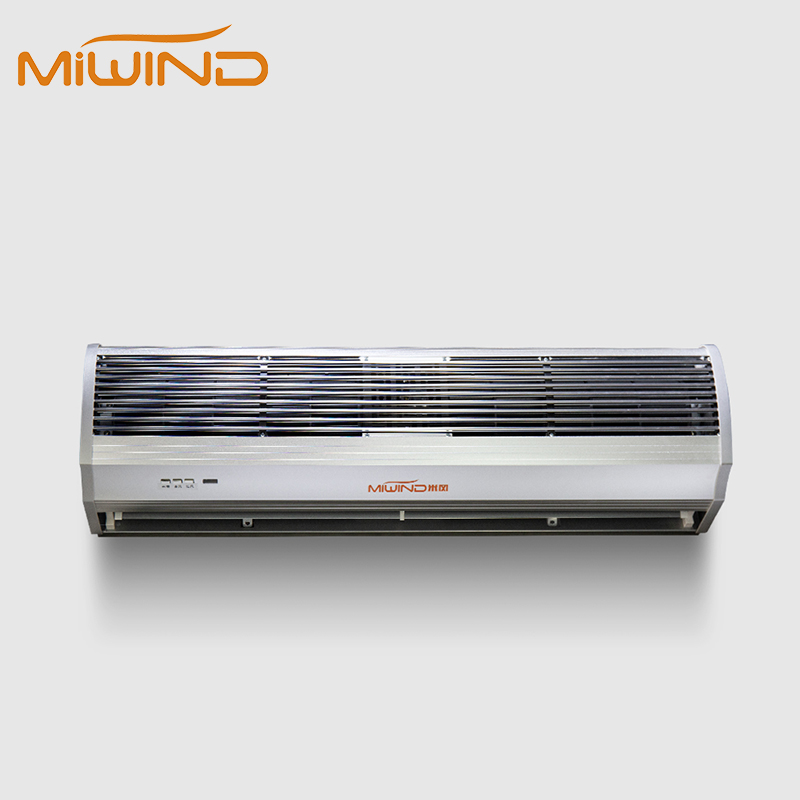
When a restaurant or grocery team starts asking about a walk in cooler air curtain, there's usually already a problem at the door. Maybe the strips are torn or tied back, staff are complaining about slow access, or condensation keeps showing up near the threshold. Nobody asks this question out of curiosity — they're trying to figure out whether an active air barrier will actually solve what PVC strips haven't.
This guide sets walk-in cooler air curtains against strip curtains for foodservice and grocery back-of-house doors, and keeps the comparison practical: how much traffic the door sees, how visibility and cleaning hold up over time, whether staff actually follow the barrier as installed, and what condensation or ice at the threshold is telling you about the space. It also covers what MIWIND needs on a quote before recommending either option. For the physics behind frost and fog in colder rooms, see Cold Storage Door Air Curtains. For dock-door and forklift traffic instead of walk-in doors, see Air Curtains vs Strip Curtains for Warehouses.
The Walk-In Door Problem: Traffic, Cleaning, Condensation, and Ice
Walk-in cooler doors are much smaller than a warehouse dock opening, but they take more abuse relative to their size. Staff pass through carrying trays, pushing carts, hauling hand trucks, or stacking beverage cases — and the door itself often sits right next to a kitchen line, deli counter, stockroom, or a humid sales floor.
Every time that door opens, several things happen at once: warm, humid air pushes into the cooler while cold air spills out into the room behind it. Over a shift, that exchange shows up as condensation on the frame or floor, frost building on colder surfaces, and strips that get grimy, cracked, or shoved aside because they're slowing people down. The refrigeration system then has to work overtime to recover the lost cold air.
- Warm humid air enters the cooler.
- Cold air spills into the adjacent room.
- Condensation appears on frames, floors, cartons, or curtains.
- Frost or ice risk increases near colder surfaces.
- Staff slow down because strips block visibility or catch on carts.
- Strips get dirty, scratched, curled, or tied aside.
- Refrigeration equipment has to recover after busy periods.
None of this means air curtains are automatically the right call. What matters is whether this particular doorway has enough traffic, hygiene pressure, and moisture load to justify swapping a passive barrier for an active one.
Where Strip Curtains Are Usually Enough
Strip curtains still earn their place in this comparison. They cost less to install, need no wiring or controls, and in a quiet walk-in, a well-maintained set of strips does the job of cutting warm air infiltration without any moving parts.
| Site condition | Why strips may still fit |
|---|---|
| Low traffic | The door opens briefly and staff can move through without slowing the workflow. |
| Clear visibility | Strips are clean, flexible, and not scratched or cloudy. |
| Good staff compliance | Workers do not tie the strips aside or remove sections for convenience. |
| Limited condensation | The adjacent area is not persistently humid and ice is not appearing at the threshold. |
| Simple budget | The site needs a basic passive layer before considering powered equipment. |
Idaho Power's grocery-store efficiency tip sheet lists sealed refrigerator and freezer doors, along with strip curtains at walk-in doorways, as standard refrigeration-load practices — a reminder that strips aren't a lesser option, just a different one. Plenty of sites just need better strip maintenance, tighter door discipline, or a seal repair before they need anything more.
When an Air Curtain May Be Worth Evaluating
An air curtain starts to make more sense once the doorway is busy enough that the strips themselves become the bottleneck — staff pushing through vinyl every few minutes, carts catching on the material, or vision through the door becoming a real safety concern.
It's worth putting an air curtain on the table when staff move through many times per shift, carts or pallet jacks keep snagging the strips, the strips themselves are dirty, cracked, missing, or permanently tied open, or condensation shows up around the frame specifically during busy periods. A non-contact barrier also matters where food handling or hygiene reviews are part of the conversation.
For a MIWIND quote, send the specifics of the actual opening: mounting height, clear width and height, ambient humidity near the door, how often it cycles, available power, preferred control method, and any submittal documents the project requires.
Air Curtain vs Strip Curtains: Decision Matrix
Base the decision on how the door actually behaves, not on what's already installed.
| Question | Strip curtains may fit | Air curtain may fit |
|---|---|---|
| How often does the door open? | Low or moderate cycles. | Frequent cycles or held-open periods. |
| How do staff move through? | Pedestrian use with little obstruction. | Carts, trays, hand trucks, or pallet traffic. |
| What is the visibility issue? | Clear strips and low collision risk. | Cloudy strips, poor sightlines, or two-way movement. |
| What is the hygiene concern? | Strips can be cleaned and maintained consistently. | Contact with strips is creating cleaning or handling concerns. |
| What is the moisture symptom? | Minor or seasonal. | Condensation, fog, wet floors, or ice symptoms near the door need review. |
| What is the control goal? | Basic passive separation. | Active airflow during frequent access. |
Sometimes the right answer is simply "fix the strips first." A missing section, a bad door seal, or a habit of propping the door open will undercut either solution — a walk-in cooler air curtain isn't a fix for poor door discipline.
When to Compare Both Options
Multi-door sites often end up running both barriers at once rather than picking one for the whole facility. A store might leave strips on a low-traffic storage cooler while installing an air curtain on the prep-area cooler that never seems to close. Others use strips as a stopgap while gathering the data needed to spec a powered unit properly.
This comparison is worth running when the cooler serves both staff and customer-facing traffic, when door use shifts noticeably through the day, when strips that worked fine all winter start failing in humid months, or when a remodel or a food-safety review is already on the table.
If documentation for a foodservice opening is the priority, see NSF 37 air curtain checks for restaurant back doors. Any walk-in application still needs to be verified against the specific model's documents and local acceptance rules.
Humidity Is a Separate Problem
Not every condensation or ice issue starts at the door. If the room outside the cooler runs humid all day, moisture keeps arriving no matter what's guarding the opening. If the frame leaks or the refrigeration system can't recover fast enough, an air curtain will help at that specific opening but won't fix the environment around it.
MIWIND's Industrial Dehumidifier and industrial dehumidifier options handle the humidity side for warehouses, storage rooms, and industrial spaces — worth pairing with an air curtain when moisture is the underlying driver, but not a substitute for fixing the door, cooler, or refrigeration system itself.
For entrance-level planning outside the back-of-house cooler area, see How to Choose an Air Curtain for a Grocery Store Entrance.
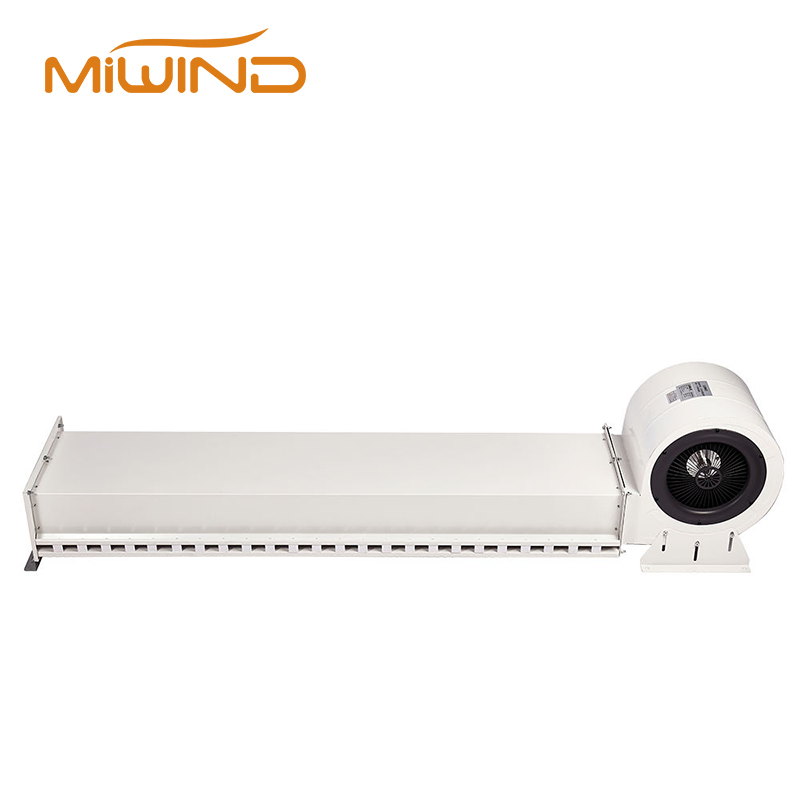
MIWIND Quote Checklist for a Walk-In Cooler Door
Reach out through Contact Us or the inquiry form to compare cooler airflow options. The more doorway detail MIWIND has, the faster the review through air curtain products, the Air Curtain Series, and the grocery and supermarket air curtain applications.
| RFQ field | What to include |
|---|---|
| Cooler type | Walk-in cooler, freezer, prep-room cooler, beverage cooler, or shoppable cooler. |
| Opening size | Clear width, clear height, and available mounting space. |
| Traffic | Staff passes per hour, carts, trays, hand trucks, pallet jacks, or customer access. |
| Door behavior | Swing, sliding, self-closing, held open, or frequently propped. |
| Current barrier | Strip curtain age, condition, missing strips, cleaning burden, and staff complaints. |
| Symptoms | Condensation, fog, ice, wet cartons, cold spill, or temperature complaints. |
| Conditions | Cooler setpoint, adjacent-room temperature, RH or dew point if available. |
| Documentation | Food-safety reviewer notes, requested submittals, photos, and short video. |
| Electrical/control | Power supply, switch preference, and whether automatic operation is expected. |
None of this is about pushing a sale. If the strips are doing their job, that's the honest answer. If they're getting bypassed, it's worth documenting why. And if moisture keeps showing up, that data belongs in the conversation too — the clearer the picture of the actual door, the easier the comparison between a passive strip barrier and an active air curtain becomes.
FAQ
Is an air curtain better than strip curtains for a walk-in cooler?
Not universally — it comes down to traffic, visibility, cleaning, and how the door behaves day to day. Low-traffic walk-ins usually do fine with well-maintained strips. Busy doors where strips get bypassed, damaged, or tied open are the ones worth reviewing for an air curtain.
When are strip curtains enough for a restaurant walk-in?
When traffic is moderate, the strips stay clean and flexible, staff actually use them as intended, the door seal is in good shape, and condensation or ice isn't showing up regularly at the threshold.
Can an air curtain help with condensation or ice near a cooler door?
It can reduce air exchange right at the opening, but condensation and ice often trace back to humidity in the adjacent room, a leaking door frame, or a refrigeration system struggling to recover — those need to be checked alongside the door itself.
Should a grocery walk-in evaluate both strips and an air curtain?
Often, yes — different doors in the same store can have very different traffic and hygiene demands. It's common to keep strips on a quieter cooler while putting an air curtain on the busier prep-area door.
Next Step
Start a walk-in door review through Contact Us. Send the cooler type, doorway dimensions, current strip condition, traffic patterns, moisture symptoms, photos or a short video, available mounting space, power details, and any food-safety documentation notes — that's enough for MIWIND to compare the right airflow options for your door.