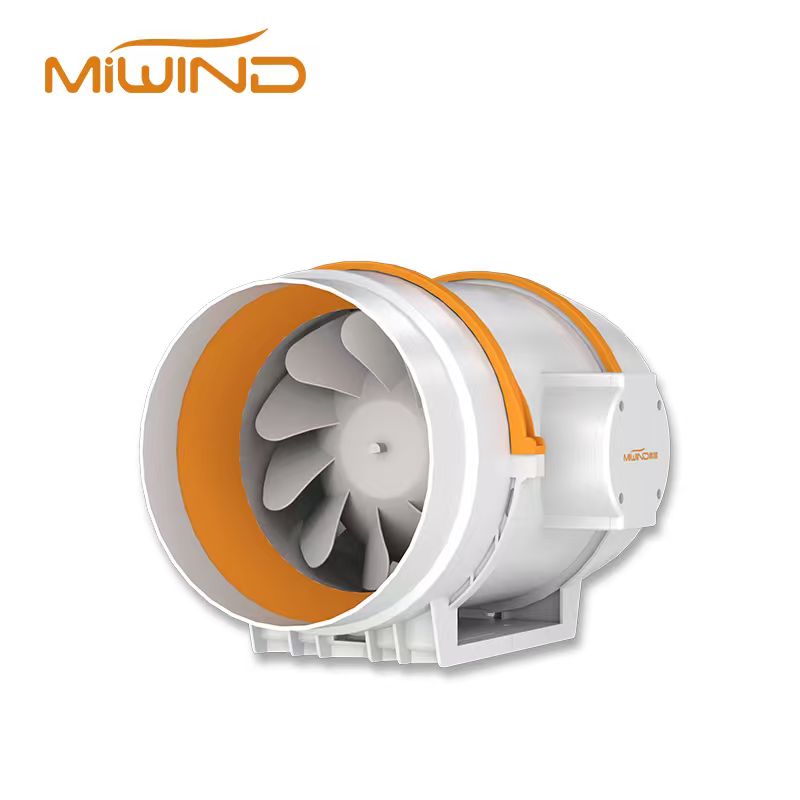
Yes, an inline duct booster fan can work when the existing system has enough available air volume but loses pressure through a long duct, filters, bends or a small branch. A booster cannot fix every weak-airflow problem. First measure or estimate the operating point, then separate a pressure problem from a blocked filter, leaking duct, wrong fan rotation or undersized system.
Diagnose the Duct Before Adding a Booster
| Finding | Likely cause | Best next action |
|---|---|---|
| Airflow is low everywhere | Main fan, filter or system pressure is insufficient. | Check the fan curve, filter loading, rotation and total static pressure before adding a small booster. |
| Only one branch is weak | Branch resistance, balancing, leakage or a closed damper. | Inspect the branch and balance it before changing the whole system. |
| Airflow falls after a filter is added | Filter pressure loss is higher than the fan allowance. | Measure filter pressure drop and select a fan that can deliver the required airflow at that pressure. |
| Noise rises after installation | High velocity, turbulence, vibration or a fan operating off its efficient range. | Review duct size, transitions, isolation and the fan operating point. |
How an Inline Booster Fan Adds Pressure
A booster fan adds energy to the air stream at the point where it is installed. The delivered airflow depends on the fan curve and the resistance of the complete connected system. It is most useful when the booster is selected for the required airflow at the measured static pressure and when the duct is reasonably sealed.
Sizing by Airflow and Static Pressure
Start with the target airflow at the diffuser, grille or process point. Add pressure losses from duct length, diameter, elbows, filters, dampers, grilles and transitions. Compare that operating point with the fan curve instead of selecting by motor power or free-air volume alone. A larger duct can sometimes solve the same problem with less noise and lower pressure loss.
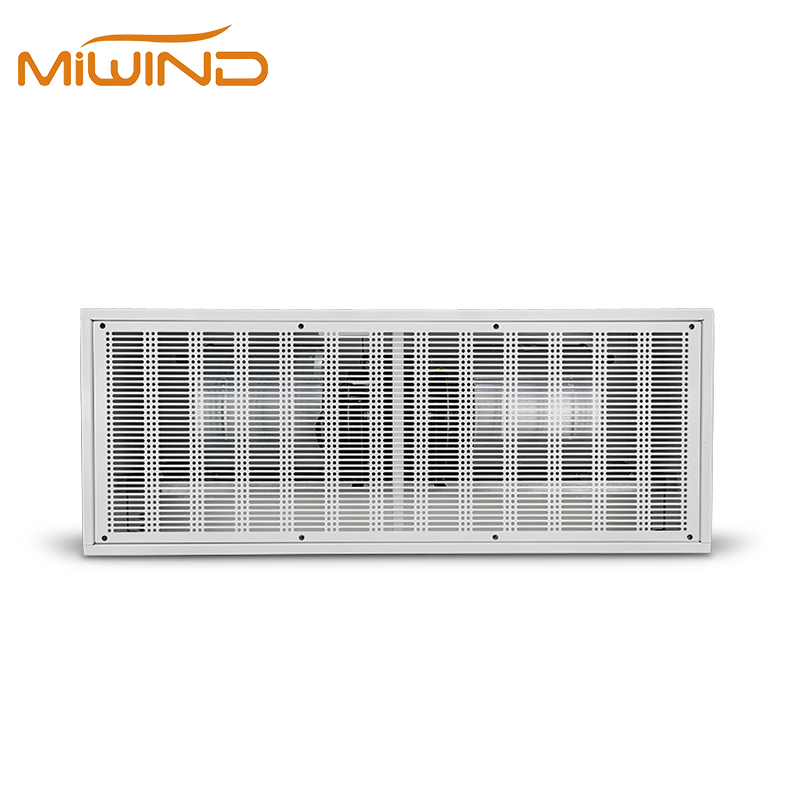
For long or restrictive routes, compare the MIWIND booster fan range with the fresh-air system range. The project should specify airflow, static pressure, duct diameter, voltage, control method, sound limit and expected quantity.
When a Booster Is Not Enough
- A blocked or undersized filter needs service or a better filter selection.
- A disconnected or leaking duct needs repair and sealing.
- A fan running backward or with an incorrect motor setting needs correction.
- A system with insufficient outdoor-air intake or make-up air needs a balanced design.
- A branch with excessive bends or a small diameter may need duct redesign rather than another fan.
Installation and Controls
Install the booster in the airflow direction marked on the housing, support the duct so the fan is not carrying its weight and provide access for cleaning and service. Use flexible connectors or suitable isolation where vibration may transfer to occupied spaces. Coordinate speed control, interlocks, filters and fire or smoke requirements with the complete ventilation system.
Request a Booster Fan Recommendation
Send the existing fan model, target airflow, duct diameter and length, number of bends, filter or grille data, measured pressure if available and expected quantity through the MIWIND contact form.