Electronics Storage Humidity: Dry Rooms, Cabinets and Dehumidifiers
Compare room humidity control, dry cabinets and dry rooms using component requirements, access patterns, monitoring and the facility ESD program.
Electronics storage humidity control should start with the component workflow. Sealed inventory, opened moisture-sensitive devices, PCB storage, reels, trays, kitting areas, repair buffers, and finished assemblies do not always need the same storage approach.
This guide is for EMS plants, SMT managers, electronics component warehouses, distributors, repair and rework teams, facility engineers, and OEM procurement teams comparing room dehumidification, dry rooms, dry cabinets, nitrogen cabinets, or hybrid storage. MIWIND can discuss solutions, industrial dehumidifier applications, technical resources, and project questions through Contact Us.
Before choosing equipment, define which requirements come from the buyer's quality system, component data, ESD program, and supplier documents. JEDEC procedures, MSL floor-life decisions, dry-room construction, nitrogen cabinet use, and very low dew-point targets should be confirmed by the responsible technical team before a humidity-control product is selected.
Why Storage Humidity Matters for Electronics Workflows
Sealed inventory, opened reels, trays, IC storage, PCB storage, kitting, and rework buffers
Electronics storage is not one room with one problem. Incoming sealed inventory may need stable warehouse conditions. Opened reels and trays may need tighter handling. PCBs may be affected by condensation or long dwell time. Kitting areas may expose components before production. Repair buffers may hold assemblies during rework. High-value ICs may need different controls than mechanical parts or packaging materials.
Do not choose an RH target from a general rule. Follow the component storage specification, the facility's ESD control program, and its monitoring and handling procedures. A room dehumidifier does not establish component moisture-sensitivity or floor-life requirements, and humidity control alone does not establish ESD compliance.
Use industrial humidity control RH target when a team needs to translate quality requirements into room-level conditions. The target should be a buyer-side requirement, not a number guessed from a catalog.
Compare Room Dehumidification, Cabinets, and Hybrid Setups
Room control, dry cabinets, controlled cabinets, and segmented workflows
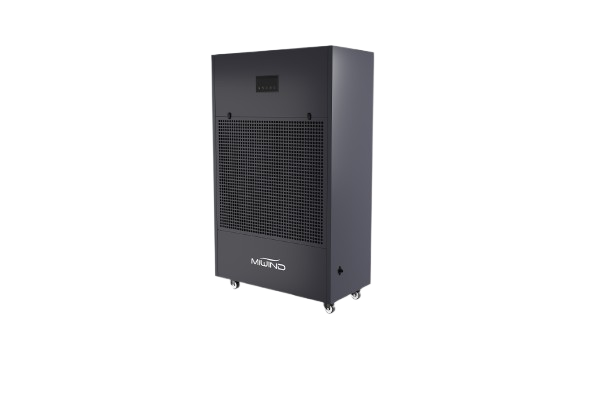
An electronics storage humidity control plan usually compares several layers. Room dehumidification may fit a warehouse, kitting room, or general storage area where many shelves and people need one controlled environment. Dry cabinets may fit smaller inventories, opened reels, or sensitive components that need local protection. Dry rooms may be considered where the process needs a highly controlled room envelope. Nitrogen cabinets may appear in some specifications, but they are a distinct technology and should not be assumed from a dehumidifier inquiry.
Controlled storage can range from a room-level humidity plan to dedicated dry cabinets or engineered dry rooms. Very low dew-point environments are specialized systems, so the buyer should separate general electronics storage from battery-grade or process-critical requirements before asking for a quotation.
Room dehumidification is often easier to integrate with walk-in access, bulk storage, cartons, pallets, and staff movement. Cabinet approaches can reduce the volume that must be kept dry, but they require disciplined opening habits and inventory control. Dry rooms can serve larger process areas, but they depend on building envelope, infiltration, doors, airlocks, HVAC, monitoring, and commissioning detail.
The comparison should list the workflow first:
- What is sealed and what is opened?
- Which items are moisture-sensitive?
- How long do components wait before production?
- Where are reels, trays, tubes, PCBs, and assemblies stored?
- How often are cabinets or room doors opened?
- What alarms, logs, or quality checks are required?
- What ESD controls already exist?
Balance Moisture Control With ESD Practices
RH targets, alarms, access habits, and inventory turnover
Define the required humidity range from component documents and the facility's quality and ESD programs. Keep component moisture handling, floor-life decisions, and room humidity control as separate requirements that the responsible technical team can verify.
The buyer should define component floor-life rules, accepted RH or dew-point range, alarms, escalation process, and records required by the ESD or quality program. The equipment conversation can then focus on whether a humidity-control approach can support those conditions for the room volume and operating pattern.
For sizing questions, use industrial dehumidifier sizing. For supplier capacity comparisons, use dehumidifier capacity ratings explained. If the buyer is unsure whether refrigerant, desiccant, or another system type belongs in the discussion, review refrigerant vs desiccant industrial dehumidifier as background.

Data to Collect Before Choosing Equipment
Send the following before requesting a quotation:
- Storage type: room, cabinet, dry room concept, warehouse zone, kitting buffer, or rework area.
- Component category and packaging state.
- Current RH and temperature range.
- Buyer-side target RH or dew point if known.
- Room size, ceiling height, rack layout, and aisle arrangement.
- Door opening frequency and access habits.
- Inventory turnover and exposure time.
- Existing HVAC, exhaust, make-up air, and filtration context.
- Monitoring, alarm, and data-recording requirements.
- ESD controls already in place.
- Power, drainage, footprint, noise, and service-access constraints.
This data lets the supplier discuss application fit without overstating capability. A room dehumidifier may help stabilize a storage area, but it does not replace component handling rules, baking requirements, MSL management, ESD procedures, or buyer-side acceptance criteria.
Where MIWIND Fits
Bring MIWIND into the review after the buyer defines the storage workflow. The solutions path fits application context, while industrial dehumidifier connects the conversation to moisture-control equipment. Technical resources can support document review before procurement.
The strongest inquiry is specific: "We store opened reels and PCBs in this room, with this target RH, temperature range, access pattern, monitoring expectation, and ESD program. Which MIWIND product route and documents should we review?" That is more useful than asking whether one product can solve all electronics storage risk.
For distribution warehouses, separate general carton and pallet storage from sensitive opened components. For SMT lines, separate production-floor buffers from long-term storage. For repair centers, separate incoming assemblies, waiting parts, and completed units. Segmentation prevents one average RH value from hiding the actual risk point.
FAQ
Is a dry room the same as a dehumidified storage room?
No. A dry room usually implies a controlled room envelope, monitoring, access control, and engineered performance requirements. A dehumidified room may be a broader humidity-control approach for storage or production support.
Can MIWIND define MSL floor life for components?
No. MSL and floor-life decisions belong to the buyer's quality system, component documentation, and applicable procedures. Equipment selection should support those requirements after they are defined.
Should electronics storage always target the lowest possible RH?
No. The target must balance moisture protection, ESD practice, handling workflow, monitoring capability, and component requirements.
What should buyers send for review?
Send component category, packaging state, storage layout, current and target conditions, inventory turnover, door traffic, monitoring needs, ESD controls, utilities, and service constraints.
Next Step: Review Electronics Storage Conditions
Use review electronics storage conditions with the checklist. A clear electronics storage humidity control brief helps MIWIND review humidity-control options while the buyer keeps electronics standards and component-handling rules under its own quality system.