ASHRAE 62.1 and 62.2: Turning Ventilation Requirements into Fan Selection Criteria
Turn designer-provided ventilation requirements into fan selection inputs for airflow, static pressure, sound, filtration, controls and installation.
ASHRAE 62.1 ventilation requirements are not a fan label. They are part of a ventilation and indoor-air-quality design process that must be interpreted by the project designer, authority having jurisdiction, and applicable code context. A fan supplier can help match equipment to defined inputs, but it should not replace the design calculation.
This article gives procurement teams a practical bridge between ventilation requirements and product selection. It avoids reproducing paid standard clauses and keeps ASHRAE review tied to the project designer, authority, and model-specific evidence.
ASHRAE 62.1 vs 62.2 Scope
Confirm the applicable scope and edition with the designer. ASHRAE 62.1 covers occupied spaces outside nontransient residential dwelling units. ASHRAE 62.2 addresses ventilation within those dwelling units. Confirm the project edition and any requirements for shared or specialized spaces. A building's height alone is insufficient to choose the applicable standard.
ASHRAE's public overview states that Standard 62.1 addresses ventilation and acceptable indoor air quality, including mechanical ventilation, natural ventilation, filtration, controls, air-cleaning systems, operations, and maintenance. The public overview for Standard 62.2 describes dwelling-unit ventilation, local mechanical exhaust, and source control for residential occupancies.
For buyers, the important distinction is ownership. The designer determines which standard and edition apply. The supplier helps identify equipment that can satisfy the designer-provided airflow, pressure, sound, filtration, controls, installation, and documentation needs.
From Ventilation Requirement to Fan Selection
Translating ASHRAE 62.1 ventilation requirements into fan selection starts with the design airflow. That airflow may be outdoor air, exhaust air, transfer air, or a combination depending on the system. It may also vary by occupancy, operating schedule, control mode, or local code amendment.
Once the airflow target is known, the fan selection must answer a more specific question: Can this equipment deliver the required airflow at the installed external static pressure, within the noise target, with the specified controls and filtration, in the available space?
That is why a procurement-ready RFQ should include more than a desired CFM. It should include the duct layout, estimated pressure losses, filter requirement, grille or louver data, damper arrangement, control sequence, operating schedule, electrical constraints, service access, and required documents. A supplier cannot responsibly select a fan from airflow alone.
Airflow and External Static Pressure
Free-air airflow is not the same as installed airflow. Fans work against resistance from duct length, elbows, transitions, filters, dampers, louvers, heat-recovery cores, silencers, and terminals. External static pressure is the pressure load outside the fan assembly that the fan must overcome to deliver useful airflow.
For duct-fan and fresh-air projects, ask for performance at the specified pressure. If the only available number is a maximum airflow with no pressure basis, it is not enough for engineering review. A stronger submittal identifies airflow at external static pressure, power input, speed setting, acoustic data if available, and installation limits.
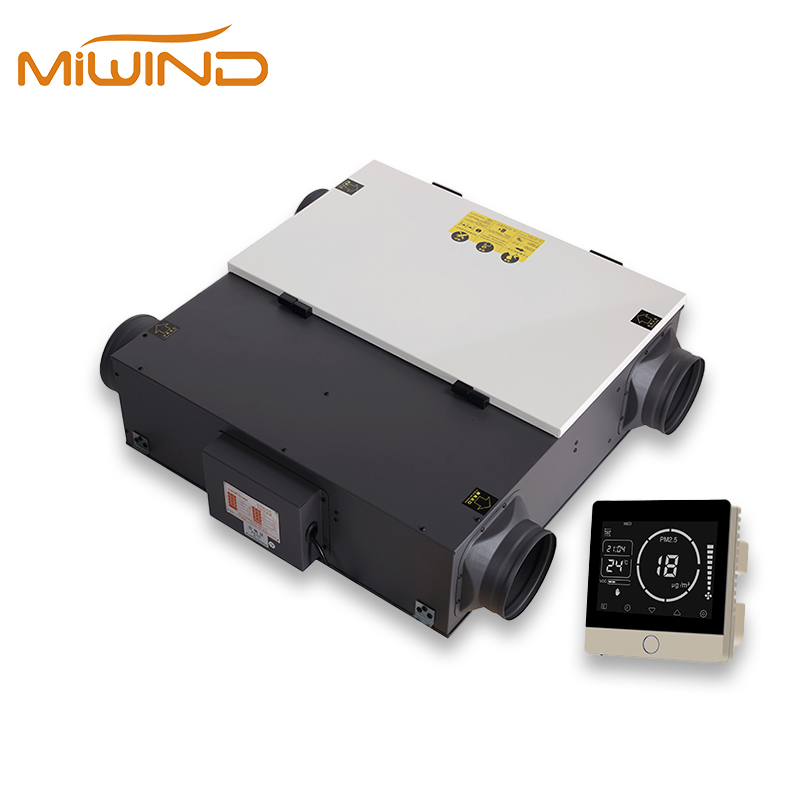
If the project includes heat recovery, pressure review becomes even more important. HRV and ERV cores can add resistance, and filters can become more restrictive as they load. Procurement teams should ask whether the quoted product data includes the installed accessories and whether replacement filters or maintenance intervals affect long-term performance.
Sound, Controls, Filtration, and Installation
Ventilation equipment is often rejected for reasons that are not visible in the first airflow number. Sound may be critical in offices, hotels, schools, apartments, clinics, and meeting rooms. Controls may require continuous operation, timer operation, speed control, demand control, building automation integration, emergency mode, or interlock with other HVAC equipment.
Filtration should also be defined before procurement. ENERGY STAR ventilation fan criteria illustrate why buyers look at efficacy, sound, installed fan performance, and filter-related ratings for some residential fan categories. That public criteria page is not a certification claim for MIWIND products, but it shows the type of supporting data reviewers often expect: airflow, pressure basis, efficacy, sound, and test/certification context.
Installation details decide whether the selected equipment can actually be used. Confirm access panels, mounting orientation, condensate handling if heat recovery is involved, outdoor-air intake location, backdraft protection, electrical service, clearances, and local service expectations.
What the Designer Must Provide
To apply ASHRAE 62.1 ventilation requirements in a procurement workflow, the designer should provide the project country or code context, applicable standard edition, building type, occupancy assumptions, required airflow, system type, outdoor-air and exhaust strategy, operating schedule, external static pressure, acoustic target, filtration requirement, control sequence, and commissioning expectations.
If those inputs are not ready, procurement can still ask MIWIND for product-range guidance, but the result should be treated as preliminary. A product family can be shortlisted before the final design is complete. A purchase specification should wait until the airflow, pressure, controls, and documentation requirements are clear.
Documentation reviewers should also ask for the exact evidence they need: datasheets, dimensional drawings, wiring diagrams, installation manuals, maintenance instructions, available fan curves, sound data if available, filtration compatibility, and any certification or listing documents that are actually held for the quoted model.

Buyer Checklist for Fresh-Air and Duct-Fan Projects
Use this checklist before issuing an RFQ:
- Building type and room type.
- Project country, code context, and standard edition.
- Required airflow, if already calculated.
- External static pressure or duct-loss estimate.
- Duct layout, length, fittings, louvers, and terminals.
- Installation constraints and service access.
- Continuous, intermittent, or demand-based operation.
- Control requirements and interface expectations.
- Filtration needs and replacement access.
- Noise target or room sensitivity.
- Heat-recovery requirement, if any.
- Electrical supply and safety-document needs.
- Commissioning, O&M, and submittal documents.
- Quantity, delivery timeline, and project phase.
This checklist helps prevent a common procurement problem: asking for a fan price before defining the duty point.
What to Ask MIWIND Before Procurement
MIWIND can help teams turn ASHRAE 62.1 ventilation requirements into practical equipment questions once the designer has defined the project inputs. For fresh-air systems, ask which product family fits the airflow range, whether heat recovery is required, what filtration options are available, and what installation documents can be provided.
For duct fans, request airflow at the specified pressure, electrical data, drawings, compatible controls and available sound information. Keep HVI, ENERGY STAR and AMCA listing evidence separate from the designer's ASHRAE compliance documents. An ASHRAE design standard is not a product certification.
The best RFQ wording is not a broad compliance request. A better request is: "Provide equipment options for this design airflow, external static pressure, control sequence, filtration requirement, sound target, installation constraint, and documentation package."
Use technical resources to frame the standard-to-selection question, compare system context in fresh air system, review duct fan series options for duty-point fit, and get ventilation product guidance with the project checklist.
Confirm scope with the official ASHRAE 62.1 and 62.2 overview and the project edition.
FAQ
What is the difference between 62.1 and 62.2?
Standard 62.1 and Standard 62.2 have different building and residential scopes. Ask the designer to identify the applicable edition and requirements for the project rather than selecting a standard from building height or a fan label alone.
Can fan selection prove compliance?
No. Fan selection supports the design, but compliance depends on the full ventilation design, installation, controls, commissioning, and local code review.
What inputs are needed before selecting a fan?
At minimum, provide required airflow, external static pressure, duct layout, operating schedule, control needs, filtration needs, sound target, installation constraints, and documentation requirements.
Why are static pressure and sound important?
Static pressure affects delivered airflow. Sound affects whether the installed fan is acceptable for the occupied space. Both should be reviewed before procurement, not after installation.
Next Step: Get Ventilation Product Guidance
Send building type, project country or code context, required airflow if known, external static pressure, duct layout, installation constraints, control requirements, filtration needs, noise target, heat-recovery requirement, commissioning or document needs, quantity, and timeline.