EC Inline Duct Fans: Variable Speed and Control Compatibility
Compare EC inline duct fans using airflow at pressure, operating states, integrated electronics, supported control signals, sound and installation conditions.
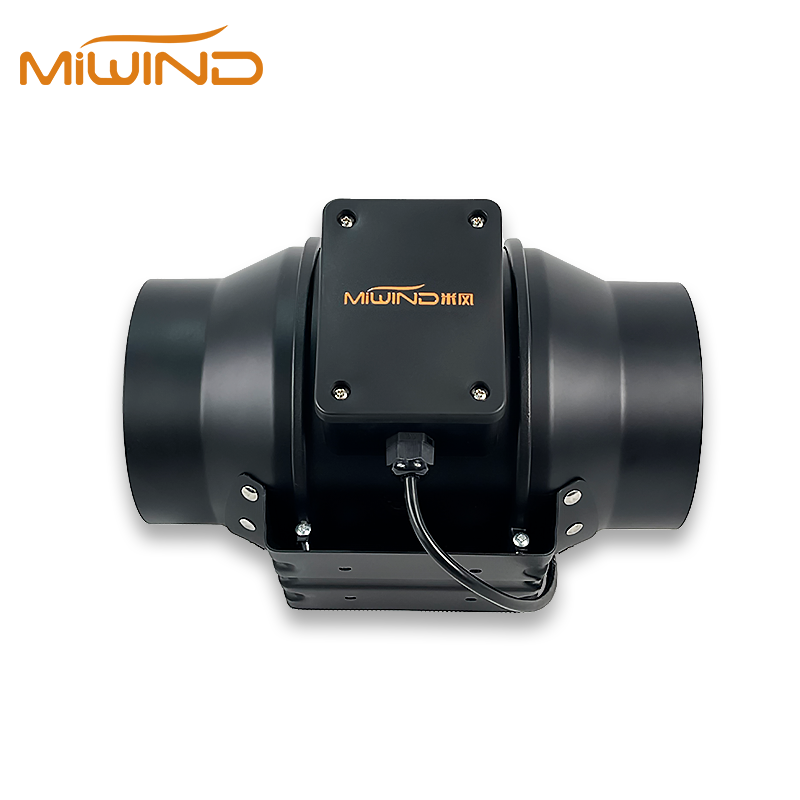
EC means electronically commutated. An EC inline duct fan uses an electronically controlled motor, typically with integrated motor electronics. Consider it when the project needs defined operating states, speed adjustment or part-load operation, and confirm the actual airflow, pressure and supported controller for the proposed model.
This guide is for OEM buyers, HVAC and MEP engineers, distributor technical sales teams, installers, and project owners comparing variable-speed duct fan options. MIWIND can review the inline duct fan series, fresh air system options, technical resources for duct fan selection, and project details sent through Contact Us.
Separate the motor power supply from its control interface. A speed command, such as a supported analog or digital signal, must match the integrated electronics. Do not connect an external variable-frequency drive or assume a protocol is supported unless the manufacturer explicitly permits it for that model.
What Variable Speed Control Means for Duct Fan Buyers
Variable speed control matters when the fan does not need to run at one airflow level all the time. A fixed-speed fan can still be correct for many simple duct runs. The question is whether the project has conditions that change during the day, during the season, or between operating modes.
The EC duct fan topic usually appears in commercial investigations because EC motors are associated with speed adjustment, control interfaces, and efficient part-load operation. The buyer still needs to confirm which control method is available on the quoted model and whether it matches the project wiring, controller, and operating sequence.
Run Time, Airflow Adjustment, and Application Goals
Start with the reason for control:
- Long daily run time where one airflow level may be too much for every condition.
- Changing occupancy, heat load, odor load, humidity load, or production schedule.
- Noise-sensitive areas where the system should avoid unnecessary high-speed operation.
- Equipment cabinets, AV closets, or control rooms where airflow demand follows heat load.
- Fresh-air or exhaust projects where the airflow target may vary between normal and peak modes.
Variable speed is not a decorative feature. It should connect to a real operating goal, a duty point, a duct layout, and a buyer who can explain how the space will be used.
When Variable Speed Inline Duct Fans Make Sense
This type of fan may deserve review when the buyer can describe at least two operating states. For example, a cabinet may need lower airflow during standby and higher airflow during equipment load. A small commercial fresh-air path may need different airflow during occupied and unoccupied periods. A quiet room may need an airflow target that meets ventilation needs without creating unnecessary sound.
Fan products should be matched to installation and performance needs, and controls should be treated as an engineered accessory area. For MIWIND projects, that means checking the required control signal, wiring, power, documentation, and operating sequence before selection.
Continuous Operation and Changing Ventilation Demand
For long-hour operation, the first question is not "Which fan is most efficient?" The first question is:
What airflow is required at each operating condition, and what duct resistance exists at those points?
Before comparing control options, review how to read inline fan curves before requesting CFM. The curve and duty point still matter. A fan with a control feature still has to move air through ducts, filters, grilles, dampers, bends, and outlets.
For variable-demand spaces, buyers should explain:
- Normal airflow target.
- Peak airflow target.
- Estimated static pressure or duct resistance.
- Operating hours per day.
- Noise requirement or room sensitivity.
- Whether the fan is part of fresh air, exhaust, transfer air, or cabinet ventilation.
What to Send MIWIND Before Selection
The MIWIND Duct Fan Series covers inline fans, silent ventilation models, heat-recovery products, compact duct runs, cabinet ventilation, and larger fresh-air exchange systems. That makes it the right product path after the buyer has defined the application, not before.
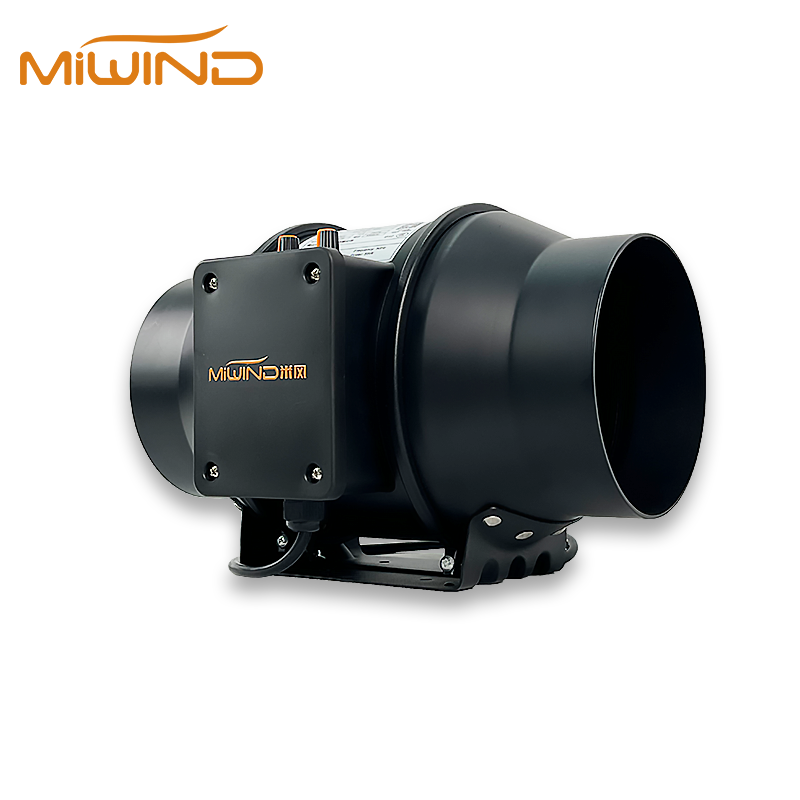
Target CFM, Duct Layout, Noise Requirement, and Control Goal
Before asking MIWIND for an EC duct fan recommendation, prepare:
- Application type: fresh air, exhaust, cabinet ventilation, room transfer, HRV path, or OEM equipment airflow.
- Target CFM at normal and peak operation if both are known.
- Duct length, duct size, bends, filters, grilles, dampers, and outlet details.
- Installation space, access limitations, and preferred service side.
- Noise requirement or nearby occupied space.
- Control goal: manual speed adjustment, demand-based operation, schedule-based operation, or integration to another system.
- Electrical supply, project country or region, purchase quantity, and documentation needs.
The control goal is important, but it should not become a made-up protocol list. If a project requires a certain controller, signal type, voltage, or building automation connection, write that as a question for confirmation.
Compare Motor Controls and Fan Geometry Separately
EC describes the motor and electronics. Mixed-flow and centrifugal describe impeller arrangements, while a sound-insulated housing addresses a different design feature. Compare these attributes separately using the operating points, acoustic data, dimensions and controls required for the project.
For example:
- A compact cabinet ventilation project may prioritize installation space and heat source location.
- A fresh-air or HRV planning project may require balanced airflow and filter access.
- An exhaust project may require more attention to make-up air and duct resistance.
- A quiet commercial interior may need lower air velocity, smoother duct layout, and sound expectations before any model is discussed.
The comparison should stay tied to the duty point. Efficiency depends on the fan, motor, controller, and operating point rather than one isolated product label.
Supplier Comparison Checklist
Use this checklist when comparing suppliers for a variable-speed duct fan project:
| Question | Why it matters |
|---|---|
| What operating states exist? | Variable speed only matters if the fan has a reason to change airflow. |
| What is the target CFM at each state? | Selection still depends on airflow at pressure, not a control feature alone. |
| What is the duct layout? | Long ducts, filters, grilles, and bends shape the duty point. |
| What control goal is required? | Protocols and wiring must be confirmed against product documents. |
| What noise expectation exists? | Noise depends on speed, duct layout, air velocity, outlet conditions, and installation. |
| What documents are needed? | Buyers may need catalogues, drawings, wiring guidance, certificates, or export files. |
For MIWIND, route technical document requests through technical resources for duct fan selection and use request an EC duct fan recommendation when the project inputs are ready.
FAQ
Is an EC duct fan always better than a fixed-speed fan?
No. It depends on the operating goal, duty point, duct resistance, control requirement, run time, noise sensitivity, and budget. A simple fixed-speed fan can be appropriate when the airflow need is stable and the duct layout is straightforward.
Can MIWIND confirm a specific control protocol from this article?
No. This article does not confirm PWM, 0-10V, VFD, BMS, or any other MIWIND control protocol. Send the required control method, electrical supply, application, and documentation needs to MIWIND for confirmation.
Should EC selection replace static pressure review?
No. An EC or variable-speed feature does not remove the need to define airflow and duct resistance. Review static pressure and inline duct fan selection and fan curve basics before final selection.
Next Step
To request EC duct fan guidance, send MIWIND the application type, target airflow, duct layout, operating states, run time, noise expectation, control goal, installation space, project market, and expected quantity. MIWIND can then compare duct fan, mixed-flow, silent ventilation, and fresh-air system options within the available product documents.