Greenhouse Dehumidifier Sizing: Inputs for a Capacity Review
Build a greenhouse dehumidification brief from moisture sources, irrigation and runoff, crop schedule, temperature, RH, airflow and unit data.
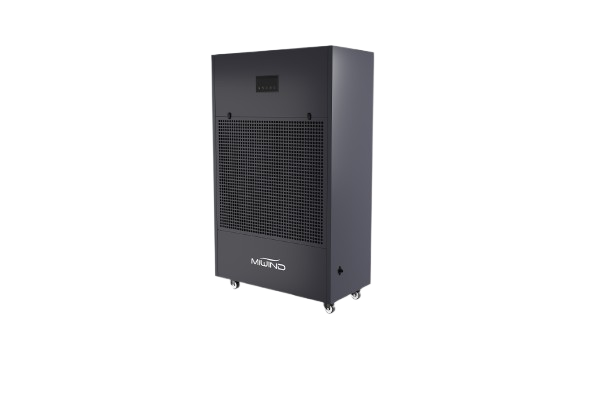
Greenhouse dehumidifier capacity cannot be selected from room volume or irrigation totals alone. Moisture sources, plant and operating schedules, outdoor-air exchange, temperature, relative humidity and airflow all affect the load. Record conditions through the day and night, then compare them with model performance at the same operating conditions.
This guide is for greenhouse owners, grow-room operators, vertical-farm engineers, and HVAC integrators who need to turn real operating inputs into a dehumidifier conversation. MIWIND can discuss solutions, industrial dehumidifier applications, industrial dehumidifier series, and project questions through Contact Us.
This guide focuses on humidity-control inputs, not crop-specific agronomy. Yield expectations, disease prevention, and exact capacity at unverified conditions require project data, operating conditions, and the appropriate technical review before a product recommendation is made.
What Drives Moisture Load in a Grow Room
Irrigation, Runoff, and Transpiration
Moisture load in a controlled grow space comes from more than the air outside. Irrigation water is a direct input. Some of it stays in the substrate, some is taken up by the plant, and some becomes evaporation or runoff. Transpiration from the plant canopy can be the biggest ongoing moisture source because the crop is actively moving water from root zone to air.
Track irrigation volume and drainage as part of the water balance, but do not treat all applied water as moisture that enters the room air. Plant uptake, drainage, evaporation from wet media and surfaces, and outdoor-air exchange affect how much water vapor the dehumidifier must remove. Use operating records and project measurements to define the load.
Lights-On vs Lights-Off Humidity
The room does not behave the same way all day. Lights on usually raise temperature and can lower RH temporarily. Lights off can cool the air, push RH upward, and create the spike that causes complaints, condensation, or control alarms. That is why a grow room can look stable in the daytime and fail at night.
If the room has frequent night spikes, the operator should note when they happen, how high they go, and how long they last. That matters because a unit that looks fine during lights on may still miss the real challenge after the crop cools down.
Inputs Needed Before Sizing
Grow Area, Temperature, RH, and VPD Targets
Before asking MIWIND for a recommendation, define the room in practical terms:
- Grow area size and ceiling height.
- Current temperature and RH.
- Target RH or vapor pressure deficit target.
- Crop stage and canopy density.
- Operating schedule and lighting schedule.
- Irrigation volume, runoff, and dry-back pattern.
- Whether the problem is steady or only at certain times.
Vapor pressure deficit (VPD) combines temperature and moisture conditions in a measure used in crop management. Record it only when the grower or agronomist has set a crop-specific target. VPD is not a dehumidifier capacity rating, so size equipment from measured moisture loads and the manufacturer's performance data.
Airflow Path and Night RH Spikes
Airflow can help or hurt. A good airflow path moves moisture away from the canopy and back toward the dehumidifier or exhaust path. A poor airflow path traps damp pockets, especially around corners, under lights, near irrigation zones, or in dense canopies.
The operator should describe:
- Where air enters and returns.
- Which zones feel stagnant.
- Whether the RH spike is uniform or localized.
- Whether fans run differently at night.
- Whether doors, vents, or equipment change the airflow pattern.
Those details matter because the same gallons/day can behave very differently depending on air movement and room layout.
Why Performance Curves Matter
A rated capacity is useful only when its test temperature and humidity are close to the intended operating conditions. Compare the selected model's performance data at the expected room conditions, and confirm airflow, controls, drainage and operating limits from its current documentation.
In other words, a dehumidifier that looks large on paper may underperform at the room's night condition, while a smaller-looking unit may be better matched if it was designed for the actual operating envelope. That is why grow room dehumidifier sizing should always include performance curves or a condition-specific review, not only a total capacity number.
The operator should ask:
- At what temperature and RH was the rating taken?
- Does the unit still perform at night conditions?
- What airflow path does it assume?
- Is the room asking for continuous load removal or spike control?
- Does the sizing basis match greenhouse or grow-room operation?
What to Share With MIWIND
The best inquiry is short, factual, and operational:
- Grow area and ceiling height.
- Gallons per day of irrigation.
- Runoff estimate.
- Crop stage and canopy density.
- Lighting schedule and lights-off duration.
- Current RH and target RH or VPD.
- Temperature range by day and by night.
- Airflow layout and fan placement.
- Notes on night RH spikes or condensation.
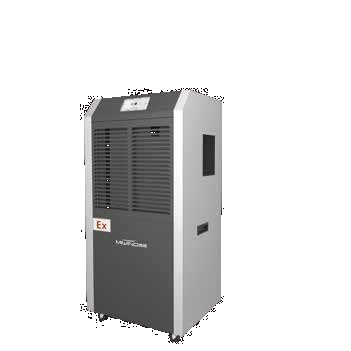
With those inputs, MIWIND can review whether an industrial dehumidifier path fits the room. That does not mean MIWIND is giving crop advice or agronomy. It means the project is being framed as a humidity-control problem, which is what a supplier can evaluate responsibly.
For a sizing brief, the most useful sentence is simple: "Here is the irrigation load, the airflow layout, the target RH or VPD, and the hours when the room spikes." That gives a much better starting point than asking for a model by room size alone.
Bottom Line
Greenhouse dehumidifier sizing is a load-and-condition review. Irrigation records, drainage, crop schedule, day and night temperature and RH, air exchange, and model-specific performance data provide a stronger basis than room volume alone. Crop targets should come from the grower or agronomist.
Use Contact Us with the checklist and the room schedule. MIWIND can then review whether the project needs a dehumidifier conversation, a different airflow conversation, or both.