AMCA-Certified Air Curtains: What Commercial Entrance Buyers Should Verify
Verify air curtain certification using the exact model, AMCA listing or seal, rating scope, performance data and the project documentation requirement.
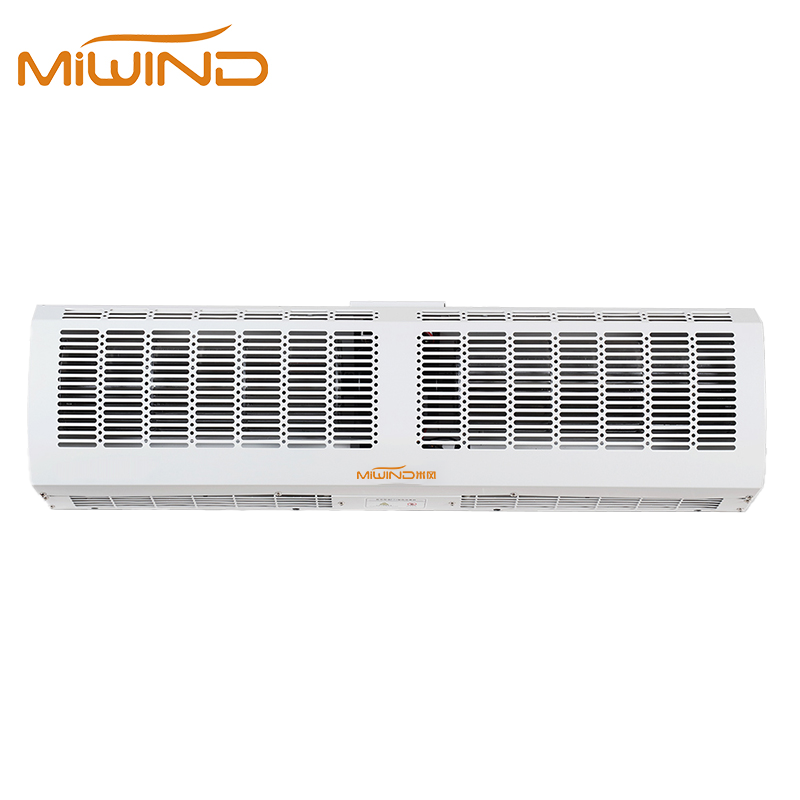
Verify an AMCA-certified air curtain by checking the exact model and rating scope in current AMCA and manufacturer records. Match the listing or seal, airflow and sound data, test reference and installation documents to the project specification before accepting the claim.
This article explains what to ask before specification, how AMCA-related language appears in vestibule-exception discussions, and where MIWIND documentation fits in the buyer workflow. It is especially useful if you are comparing air curtain suppliers for a retail entrance, hotel lobby, public building, mall, or bulk procurement project.
When AMCA certification is required, verify the status of the exact model through current supplier documents and the relevant AMCA listing. Treat MIWIND's general compliance documents and AMCA-related rating evidence as separate parts of the review file.
What "AMCA-Certified Air Curtain" Means in Buyer Reviews
AMCA International operates a Certified Ratings Program for air movement and control products. On AMCA's official Air Curtains page, the specification guidance refers to the AMCA Certified Ratings Program seal for Air Performance and for Sound and Air Performance. The same page references ANSI/AMCA Standard 220 for laboratory methods of testing air curtains for aerodynamic performance ratings.
For buyers, the practical point is simple: ask for model-level evidence. A brand page, a catalog cover, a general test-standard reference, or a supplier sentence saying "AMCA" is not enough. If your project requires AMCA-certified ratings, the purchasing file should show the exact model, the relevant rating data, and the seal or directory evidence that the project team needs.
This matters in three common situations:
- A consultant writes "AMCA-certified air curtain" into a commercial entrance specification.
- A code reviewer asks for performance documentation because an air curtain is being considered in a vestibule-exception discussion.
- A distributor wants to compare suppliers using data sheets, sound information, and installation documents rather than price alone.
Standards and Code References Buyers May Encounter
ANSI/AMCA 220 is often mentioned because it is the test method referenced in air curtain performance discussions. ASHRAE 90.1-2019 Addendum ao also references ANSI/AMCA 220 or ISO 27327-1, along with installation, commissioning, jet velocity near the floor, and automatic controls tied to door operation.
That does not mean every project requires the same package. A retrofit store entrance, a public building, a shopping mall, and a hotel lobby can fall under different adopted code versions and owner standards. The buyer's job is to define the documentation requirement before comparing proposals.
When the project team says "we need an AMCA-certified air curtain," ask what they actually mean:
- Is AMCA certification required by the specification, or is ANSI/AMCA 220 testing referenced as a performance method?
- Is the project trying to document a vestibule exception?
- Is sound performance also part of the submittal review?
- Is the buyer asking for an AMCA listing, a sealed data sheet, or a supplier statement?
- Does the local authority require a specific format for the documents?
Those questions prevent a common procurement mistake: accepting a phrase when the reviewer needs a file.
What to Ask Suppliers Before Specification
A clear RFQ should ask for specific documents, not just a price. Use the following verification checklist before comparing commercial entrance air curtain proposals.
| Buyer check | Why it matters | What to request |
|---|---|---|
| Exact model number | Certification and performance are model-specific | Model code, voltage, heat option, width, and mounting type |
| AMCA status, if required | Prevents unsupported certification claims | AMCA seal data sheet or directory listing for the proposed model |
| Air performance | Shows whether the unit fits the opening and review criteria | Airflow, outlet velocity, installation height, and relevant test basis |
| Sound data | Important for lobbies, retail, offices, and hotels | Sound and air performance information when available |
| Installation instructions | Code language often depends on correct installation and commissioning | Mounting instructions, clearances, controls, and commissioning notes |
| Controls | Door-linked operation can be a requirement | Door switch, automatic control, remote control, or BMS interface details |
| Documentation package | Speeds engineering and purchasing review | Catalog, data sheet, certificates, wiring diagram, and project notes |
If a supplier cannot identify the exact model or provide the requested data, the buyer should not assume the product meets the specification.
MIWIND Compliance Documents Are Not AMCA Certification
Use the MIWIND certificate library to identify available documents, then confirm the model, issuing body, standard, revision and scope for each file. A declaration, product test report and quality-management certificate serve different purposes and should be reviewed separately.
They are not the same as AMCA certification.

This distinction should be visible in every buyer file. An EMC verification image, a CE document, or a RoHS declaration may support electrical or market compliance. AMCA Certified Ratings Program status needs its own model-level document or listing. If AMCA is required, ask specifically for the AMCA-related document or listing for the exact model.
That distinction protects both sides. It helps buyers avoid misfiling documents, and it helps suppliers avoid overpromising. It also keeps the conversation focused on the right documents for the right requirement.
Commercial Entrance Documents Buyers Commonly Request
For a serious commercial entrance project, a complete spec pack often includes:
- Product catalog or series overview.
- Model data sheet.
- Air performance information.
- Sound information when the entrance is customer-facing.
- Installation and mounting instructions.
- Door-control or wiring information.
- Available compliance documents for the destination market.
- Project photos or drawings marked with doorway width and installation height.
- Order requirements such as voltage, phase, quantity, packaging, and destination.
A strong document workflow organizes data sheets, specifications, installation instructions, wiring information, certificates, and product flyers in one place. MIWIND's technical resources, downloads, and air curtain catalog category should support that bridge between article research and quotation.
Where MIWIND Fits in the Buyer Workflow
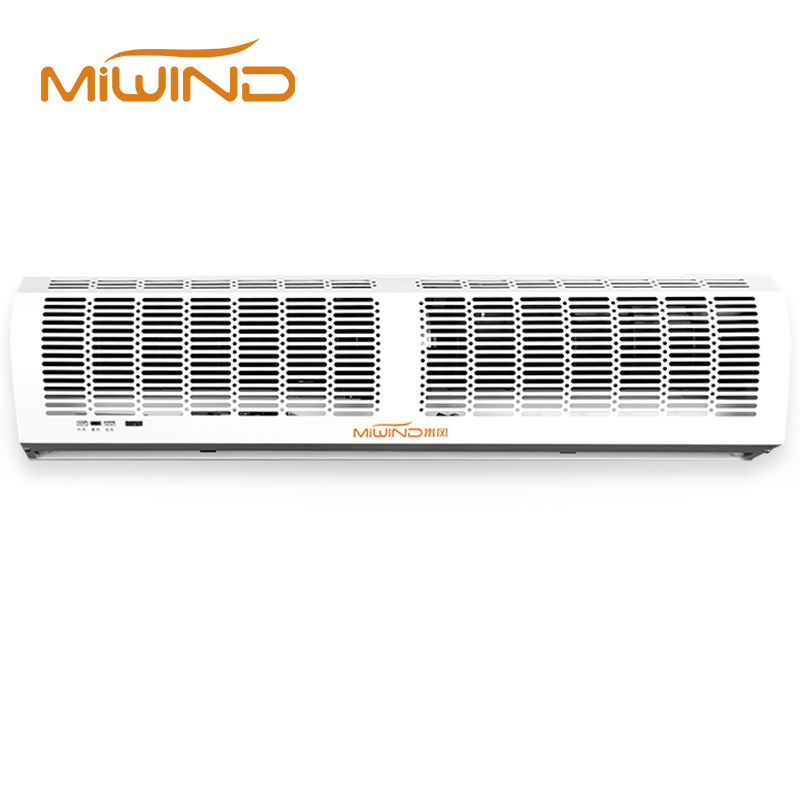
Use the MIWIND Air Curtain Series as a starting point for product comparison. Request the proposed model's performance data, electrical ratings, installation instructions and control information. Confirm any required AMCA listing independently before accepting the submittal.
For AMCA-related projects, the recommended MIWIND workflow is:
- Start with the air curtain vs vestibule selection criteria to understand the code and space-planning question.
- Define whether AMCA-certified ratings, ANSI/AMCA 220 testing references, or another performance document is required.
- Share doorway width, installation height, door type, controls, voltage, and destination market.
- Request available MIWIND catalogues, data sheets, and compliance documents.
- Ask the MIWIND team to identify any missing documentation before final model comparison.
This turns the inquiry into a controlled technical review instead of a broad catalog request.
Buyer Verification Checklist
Before placing an order or forwarding documents to a consultant, confirm:
- The proposed air curtain model is named.
- The project requirement is written clearly: AMCA certification, ANSI/AMCA 220 reference, local code review, or general performance comparison.
- AMCA-related evidence is separated from CE, CB, RoHS, SGS, ISO, and Reach documents.
- The data sheet matches the width, height, mounting, heat, voltage, and controls being quoted.
- Installation instructions and commissioning notes are available when code documentation requires them.
- The supplier has reviewed doorway drawings or measurements, not only the product width.
If any item is missing, ask before procurement. It is less expensive to correct a document gap before ordering than after the reviewer rejects a submittal.
Related Reading
For the broader code and design decision, read Air Curtain vs Vestibule for Commercial Entrances.
For preparing the RFQ dataset, read How to Measure a Commercial Entrance Before Requesting an Air Curtain Quote.
FAQ
What should buyers verify on an AMCA-certified air curtain data sheet?
Verify the exact model, rating seal or listing evidence, air performance, sound information when required, installation height, mounting type, controls, voltage, and the standard referenced by the project specification.
Is CE, CB, RoHS, SGS, or ISO the same as AMCA certification?
No. Those documents can support market compliance, quality, or product documentation, but they are not AMCA Certified Ratings Program evidence. Keep them in separate sections of the submittal file.
Why does ANSI/AMCA 220 matter?
ANSI/AMCA 220 is a laboratory test method for air curtain aerodynamic performance ratings. It appears in common code and specification discussions, including ASHRAE 90.1-2019 Addendum ao.
What does ASHRAE 90.1-2019 Addendum ao reference?
It references performance testing, installation and commissioning according to manufacturer instructions, jet velocity at 6 in above the floor, and automatic controls tied to door opening and closing. Always verify the locally adopted code.
What should be included in an air curtain spec pack?
A practical spec pack includes catalog, data sheet, model details, performance information, sound data if needed, installation instructions, controls, available compliance documents, and project-specific doorway information.
Can MIWIND help review requirements before model selection?
Yes. Buyers can send model targets, doorway size, installation condition, voltage, quantity, destination market, and required documents through the MIWIND contact page for selection support.
Request a Spec Pack
Use MIWIND's contact page to request available catalogues, data sheets, and compliance documents. Include the target model or product range, doorway width, installation height, voltage, controls, destination market, order quantity, and any AMCA-related requirement written in the project specification.