High-Speed Doors and Air Curtains in Cold Storage: When to Use Both
Compare high-speed doors and air curtains by closed-door sealing, open time, traffic and moisture symptoms in cold storage.
In cold storage, a high-speed door limits open time and seals the opening when closed. An air curtain may help reduce air mixing while traffic passes through an active opening. The two systems address different parts of the doorway cycle and should be evaluated against the site's temperatures, humidity, traffic and operating rules.
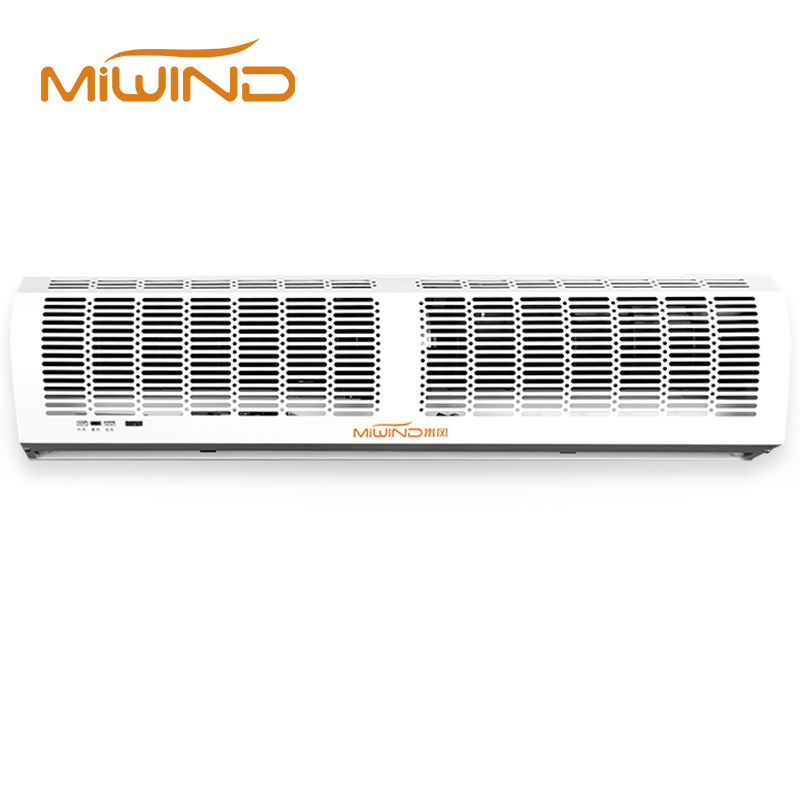
In a cold-chain doorway review, MIWIND air curtains fit beside high-speed doors rather than replacing them. The door reduces open time, while the air stream helps reduce air and moisture exchange during active traffic. The right answer depends on temperature difference, humidity, door behavior, traffic, pressure, and frost or condensation symptoms.
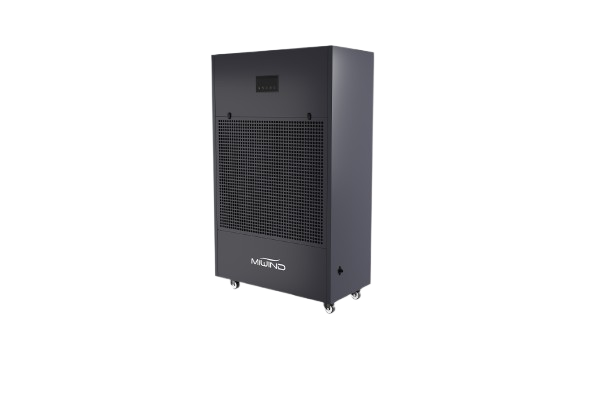
For MIWIND, start from Solutions and Industrial Series solutions, then route the air-curtain portion to the Air Curtain Series. If humidity persists beyond the doorway event, add Industrial Dehumidifier and Industrial Dehumidifier Series to the review.
Start with the Doorway Problem
Cold-chain openings fail in different ways. A buyer may say "we need an air curtain," but the site symptoms may point to door cycle, humidity, refrigeration recovery, damaged seals, or operational discipline.
Common symptoms include:
- Fog at the freezer or cooler doorway.
- Frost on the door frame, header, or nearby surfaces.
- Ice or wet floor near the threshold.
- Condensation on panels, strip curtains, or high-speed door fabric.
- Warm air entering during receiving or dispatch.
- Product staging close to an open doorway.
- Doors disabled, held open, or opened too early.
- Forklift traffic that prevents the door from closing between cycles.
The first decision is to separate the symptom from the tool. An air curtain can be part of cold-storage environmental separation, but the full system still needs door, pressure, humidity, refrigeration, traffic, and control review.
For frost and fog basics, read Cold Storage Door Air Curtains. This guide focuses on whether high-speed doors and air curtains should be reviewed together.
High-Speed Doors Reduce Open Time and Improve Closed-Door Sealing
High-speed cold-storage doors primarily address time and closure. When the door can open, pass traffic, and close quickly, the opening spends less time exposed. A well-maintained door also helps when it is closed by limiting leakage through the doorway assembly.
When reviewing the door side of the project, keep the discussion on the actual door installed or specified for the site. Confirm opening speed, closing speed, seal condition, cycle count, controls, heating or anti-frost features if present, maintenance history, and whether the door closes reliably between traffic movements.
High-speed doors tend to be the priority when:
| Condition | Why the door matters |
|---|---|
| The door can close between traffic cycles | Reducing open time may reduce exposure. |
| Closed-door leakage is the visible issue | Seals, panels, guides, and door repair may come first. |
| Staff leave a slow door open | Better door behavior may reduce bad habits. |
| Product temperature excursions follow long open periods | Door cycle and staging rules need review. |
| Frost forms on the door hardware or fabric | Door design, seals, humidity, and controls may need attention. |
A high-speed door does not remove all exchange during active traffic. If forklifts move continuously, the opening may still experience warm, humid air mixing with cold air.
Air Curtains Reduce Exchange During Active Openings
An air curtain directs airflow across an active doorway and may reduce air exchange while traffic moves through. Results depend on opening geometry, mounting, airflow, pressure difference, wind and operating conditions; it does not replace a sealed door or humidity control.
For MIWIND review, define the air curtain role clearly: it is reviewed to help reduce air and moisture exchange at an active opening. It should be selected with the full doorway system because frost, fog, ice, safety, and temperature stability also depend on humidity, refrigeration, door condition, traffic, and maintenance.
Air curtains tend to be reviewed when:
- Forklift or pallet movement prevents long door closure.
- Operators need a non-contact barrier during active movement.
- Fog or condensation appears during traffic, not only after hours.
- Strip curtains create workflow or visibility problems.
- High-speed doors are present but still exposed to humid air during cycles.
- The buyer wants to reduce exchange without blocking the passage.
The air curtain should be coordinated with door switches, timers, interlocks, or operating rules when available. The timing matters. If airflow starts too late, moisture and warm air may already enter. If it runs at the wrong time, staff may disable it.
When Both Systems Make Sense
The two-system approach is easiest to understand as a time barrier plus an airflow barrier.
| Doorway condition | High-speed door role | Air curtain role |
|---|---|---|
| Short, separated traffic cycles | Close quickly between movements. | Support the opening while traffic passes. |
| Continuous forklift flow | May stay open longer than ideal. | Reduce exchange during the active period. |
| Cold room to ambient warehouse | Seal when closed. | Reduce warm humid air movement when open. |
| Fog during loading periods | Reduce exposure time if controls allow. | Reduce mixing during traffic. |
| Moisture on door fabric or frame | Door condition and humidity need review. | Airflow may help reduce moisture load at the opening. |
| High humidity in adjacent space | Door alone may not solve it. | Air curtain may help at the doorway, but dehumidification may be needed. |
In a MIWIND review, the Air Curtain Series belongs to the active-opening layer. It should be discussed with doorway width, height, mounting clearance, traffic pattern, door signal, delay behavior, temperature difference, and humidity symptoms. The high-speed door remains a separate door package, and its speed, seals, controls, and anti-frost details should come from the door supplier or project documents.
Cold-chain doors are part of the larger loading and receiving system. If the doorway connects to a dock, dispatch area, or high-traffic warehouse route, also review Loading Dock Energy Loss Solutions Compared and Warehouse Dock Door Air Curtains.
When Dehumidification or Door Repair Comes First
Sometimes the correct next step is not another doorway product.
Dehumidification or HVAC review may come first when the adjacent warehouse stays humid all day, when RH or dew point is high, or when condensation appears even with limited door activity. MIWIND's Industrial Dehumidifier and Industrial Dehumidifier Series can support that conversation when the issue extends beyond the doorway event. Send room volume, temperature, RH or dew point, moisture source, drainage notes, and operating schedule before asking for humidity-control review.
Door repair may come first when:
- Seals are torn or missing.
- Door panels do not close correctly.
- Frost or ice forms at specific leakage points.
- Door controls are disabled.
- The door is too slow for the traffic pattern.
- Operators leave the door open because the workflow is poorly organized.
Cold storage problems are often coupled. Door behavior, airflow, humidity, refrigeration recovery, floor drainage, and safety routines all shape the final answer.

MIWIND Cold-Chain RFQ Checklist
For a cold-chain doorway review, prepare the following information:
| RFQ field | What to send |
|---|---|
| Room type | Freezer, cooler, chiller, refrigerated dock, or transition zone. |
| Door dimensions | Clear width, clear height, mounting height, and side/header clearance. |
| Temperatures | Room setpoint, adjacent-space temperature, and outdoor conditions if relevant. |
| Humidity | Adjacent RH or dew point if available. |
| Door status | Existing high-speed door, sectional door, strip curtain, or open passage. |
| Door behavior | Open time, cycle count, disabled controls, and held-open periods. |
| Traffic | Forklift, pallet, cart, pedestrian traffic, peak periods, and staging rules. |
| Symptoms | Fog, frost, ice, condensation, wet floor, door fabric moisture, or product concerns. |
| Systems | Refrigeration, HVAC, dehumidification, pressure, exhaust, and make-up air details. |
| Controls | Door switch, timer, interlock, BMS, or continuous-operation preference. |
| Evidence | Photos, short video, layout drawings, and required documents. |
Use technical resources and downloads after MIWIND confirms the likely review path. If the project also includes a high-speed door specification, send those door documents with the air-curtain and humidity-control inquiry so the doorway package can be reviewed as one system.
FAQ
Does a high-speed door replace an air curtain in cold storage?
Not automatically. A high-speed door reduces open time and improves closure when it is working properly. An air curtain is reviewed for the period when the doorway is open and traffic is moving.
Does an air curtain replace a high-speed freezer door?
No. A closed and sealed door remains the primary closed-door barrier. An air curtain can support active openings, but it does not replace door sealing, door repair, refrigeration review, or operating discipline.
When should both be used together?
Both may be reviewed when the door has high traffic, frequent opening cycles, fog or moisture during traffic, and a need to reduce air exchange without blocking forklifts or pallets.
Can this stop frost, fog, or ice completely?
No single doorway product can guarantee that. Frost, fog, and ice can involve humidity, temperature difference, door cycle, pressure, floor conditions, drainage, refrigeration, and maintenance. The practical goal is to reduce avoidable exchange and identify which conditions still need separate correction.
What data does MIWIND need for a cold-chain doorway review?
Send door dimensions, room and adjacent temperatures, RH or dew point, existing door status, open time, traffic, frost/fog/ice locations, photos, controls, and refrigeration or dehumidification context.
Next Step
Use Contact Us to send the cold-chain doorway package. MIWIND can review whether the inquiry belongs to Industrial Series solutions, the Air Curtain Series, humidity control, or a combined doorway system discussion.