HVAC Supplier Scorecard: Compare Manufacturers Beyond Price
Use an evidence-based scorecard to compare product fit, documents, quote terms, samples, timing, support and total cost.

An HVAC supplier scorecard helps a buying team compare manufacturers using the same evidence. For ventilation products, review model fit, documents, sample approval, quotation terms, timing, after-sales ownership and landed cost alongside unit price.
This guide is for HVAC distributors, importers, OEM/ODM buyers, sourcing managers, and channel teams building an RFQ shortlist. MIWIND can discuss partner cooperation, OEM/ODM service, and supplier questions through Contact Us.
Use the scorecard to compare evidence, not sales language. The same model price can carry very different risk depending on documents, sample approval, support ownership, packaging, certification questions, production timing, and export readiness.
Why Unit Price Is Not Enough
Product fit and application risk
The first scorecard category is product fit. A supplier may quote a fan, air curtain, or dehumidifier quickly, but the model must fit the application, voltage, mounting, airflow, controls, documents, and target market. A low price on the wrong product is not a savings.
Use HVAC ventilation RFQ guide to structure the technical request before scoring suppliers.
Process evidence
QIMA's factory audit page frames supplier review around process and verification. Buyers should ask for evidence instead of relying only on catalog claims, especially when repeat distributor orders are planned.
Scorecard Categories
Product and document completeness
Score whether the supplier can provide datasheets, manuals, wiring diagrams, labels, certificates, test reports, carton data, spare-parts notes, and model coverage. Use technical downloads and the ventilation product spec sheet checklist for model-level file review.
Quote clarity and commercial terms
Score whether the quote states model, configuration, voltage, quantity, Incoterms, payment terms, sample path, packaging, documents, lead time, validity date, and assumptions. A quote that hides assumptions creates work for purchasing, engineering, finance, and after-sales teams later.
Samples, MOQ, and lead time
Score sample availability, sample type, approval process, MOQ explanation, mixed-SKU flexibility, forecast handling, and schedule assumptions. Timing should cover confirmation, materials, production, inspection, packing, documentation, and export preparation, not assembly alone.
After-sales and warranty ownership
Score who handles warranty questions, proof requirements, parts lookup, technical troubleshooting, RMA, freight responsibility, and customer escalation. Use HVAC distributor warranty terms to avoid vague promises.
Communication quality and total cost
Score communication quality separately from friendliness. A good supplier answer names assumptions, missing data, document limits, and next steps. A quick but vague reply may hide risk. Total cost should include sample cost, packaging changes, document cleanup, warranty handling, spare parts, freight, customs, local relabeling, and catalog work after launch.

Example Scorecard
The weights below are examples, not a universal purchasing rule. Set category weights before reviewing supplier prices, require evidence for every 1-to-5 score, and record the reviewer and open action. To calculate a weighted average on a 1-to-5 scale, multiply each score by its percentage weight and divide the total by 100.
| Category | Example weight | Evidence required | Red flag | Follow-up owner |
|---|---|---|---|---|
| Product fit | 20% | Model match to application, voltage, mounting, airflow, controls, and market | Quote is based on a generic product name without configuration detail | Engineering / sales |
| Documents | 15% | Datasheet, manual, wiring diagram, label, certificate file, carton data, model coverage | File names or certificate scope cannot be tied to the quoted model | Engineering / compliance |
| Quote clarity | 15% | Model, quantity, Incoterms, payment terms, sample path, packaging, validity date, assumptions | Unit price is provided without configuration, terms, or document scope | Purchasing |
| Samples | 10% | Sample type, approval process, photos, inspection notes, sign-off record | Bulk order is requested before the buyer knows what sample is being approved | Purchasing / technical |
| MOQ and timing | 15% | MOQ explanation, mixed-SKU treatment, production stage, shipment preparation | Lead time is stated as a single number without inputs or assumptions | Purchasing |
| After-sales | 15% | Warranty terms, parts lookup, troubleshooting path, RMA process, escalation contact | Support responsibility is vague after shipment | Service team |
| Communication | 10% | Response quality, consistency, missing-data list, clear next step | Fast replies avoid the buyer's technical questions | Buying team |
Weight The Scorecard Before Prices Arrive
Not every buyer should weight the categories equally. A private-label launch may weight packaging, samples, and document consistency higher. A project-driven distributor may weight technical fit, certificates, and lead time higher. A replenishment buyer may weight quote clarity, communication, and after-sales continuity higher.
Set the weighting before suppliers respond. Otherwise the team may unconsciously adjust the scorecard after seeing prices, which turns the process back into price-first selection.
When to Continue, Clarify, or Pause the RFQ
A scorecard is useful only if the team agrees what to do with weak evidence.
| Result | Buying action | Typical reason |
|---|---|---|
| Continue | Keep the supplier in the shortlist and request the next commercial step | Product fit, documents, timing, and support ownership are clear enough for comparison |
| Clarify | Ask targeted questions before negotiation | One category is incomplete, such as certificate scope, sample path, or carton data |
| Pause | Hold the RFQ until evidence improves | The quoted model, document scope, support owner, or production assumption is unclear |
| Reject | Remove the supplier from the shortlist | Key product fit, safety, compliance, or support issues remain unresolved |
For high-volume distributor orders, one unresolved category can affect local sales teams for years. The point of the scorecard is to find those risks before price negotiation becomes the only conversation.
MIWIND Partner Evaluation Checklist
Ask MIWIND:
- Product families and target applications.
- Model fit, voltage, mounting, and market assumptions.
- Datasheets, manuals, drawings, labels, certificates, and carton data.
- Quote assumptions, MOQ questions, sample process, lead time questions, and document scope.
- Private-label or OEM/ODM requirements.
- Warranty, after-sales, spare-parts, and escalation questions.
- Export market, logistics, timeline, and forecast.
Ask which evidence can be shared before shortlisting, before samples, before deposit, before production, and before shipment. Some files help early comparison, while other project documents are only needed when the buyer moves toward production approval.
| Evaluation stage | Evidence to request | Decision supported |
|---|---|---|
| Shortlisting | Catalog, model range, target applications, basic datasheets, market fit | Decide whether MIWIND belongs in the RFQ set |
| Sample review | Sample type, label direction, manual draft, photos, approval notes | Decide whether the product and presentation fit local sales needs |
| Production approval | Final model list, voltage, packaging files, certificate questions, inspection plan | Decide whether the order is ready for factory scheduling |
| Shipment preparation | Packing list, carton marks, export documents, after-sales contact path | Decide whether the distributor can receive and support the order cleanly |
If a supplier cannot provide one category yet, mark it as pending rather than failing the supplier automatically. The scorecard should reveal open questions so the buyer can decide whether the risk is acceptable, negotiable, or a reason to pause the RFQ.
For team review, keep one shared version of the scorecard. Sales may prefer the broadest product range, finance may prefer the lowest price, technical teams may prefer cleaner documents, and service teams may care most about parts and support. A shared sheet makes those tradeoffs visible before the buyer commits.
Archive the final version with the RFQ files so future reorder decisions can see why the supplier was selected.
FAQ
What is an HVAC manufacturer supplier scorecard?
It is a structured comparison tool for evaluating HVAC suppliers by product fit, documents, quote clarity, samples, certifications, timing, support, communication, and total risk.
Should price still be part of the scorecard?
Yes, but price should be weighed with product fit, documentation, support, and order risk. The lowest price is not always the lowest total cost.
How should buyers use the scorecard?
Score each supplier after receiving comparable RFQ responses, then highlight missing evidence and unresolved questions before choosing the shortlist.
What score should trigger supplier rejection?
There is no universal cutoff. Reject or pause the RFQ when a low score touches product fit, safety, certificate scope, sample approval, or after-sales ownership and the supplier cannot provide a clear corrective answer.
Should price have a fixed weight?
Price should be weighted after the buyer defines product fit, documents, support, timing, and local market requirements. A lower unit price is weak if it creates higher warranty, relabeling, documentation, or launch risk.
Next Step: Evaluate MIWIND As Partner
Use evaluate MIWIND as partner with the scorecard. A clear HVAC manufacturer supplier scorecard keeps procurement decisions tied to evidence instead of unit price alone.
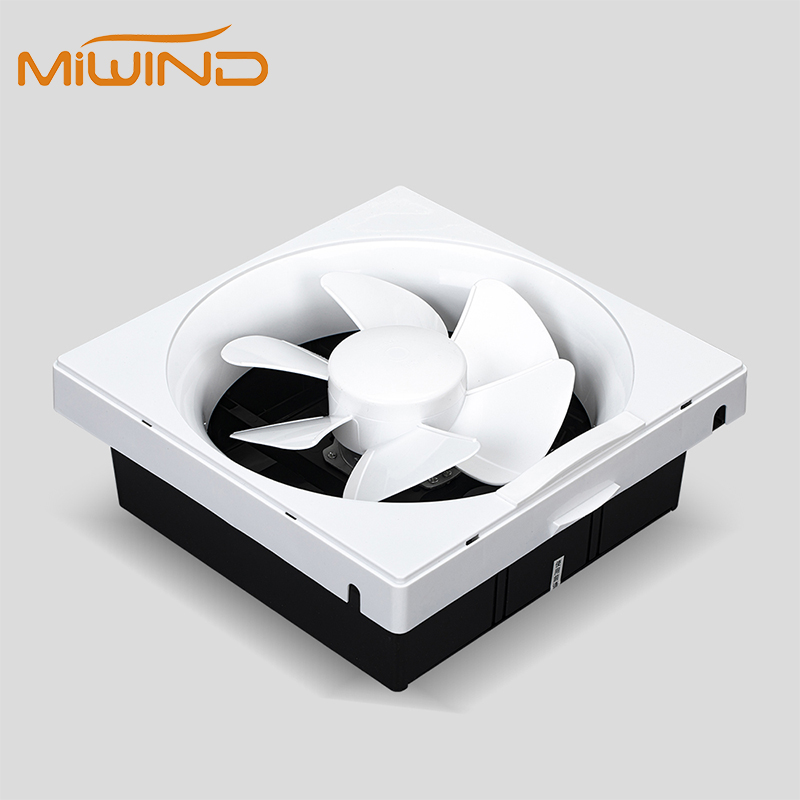
Compare the duct fan range and exhaust fan range using the project's model and documentation requirements.