Air Curtains in Humid and Coastal Entrances: What to Check
Assess humid and coastal entrances using dew point, condensation location, door cycles, wind, pressure, corrosion exposure and HVAC conditions.
At a humid or coastal entrance, first identify the symptom: air movement during door cycles, condensation on a cold surface, water at the threshold, corrosion on exposed parts or high indoor humidity that persists while the door is closed. These conditions can have different causes and may need separate reviews.
This guide explains how to evaluate humid and coastal entrances before requesting an air curtain recommendation from MIWIND. Use it to separate entrance airflow questions from HVAC, drainage, envelope, pressure, and dehumidification questions, then send a clearer RFQ instead of asking one product to solve several site problems at once.
Why Humid and Coastal Entrances Behave Differently
A dry commercial entrance is usually reviewed around opening size, mounting height, traffic, noise, heating or cooling goals, and controls. A humid or coastal entrance adds another layer: moisture can move through the opening whenever the door cycles, and that moisture may condense when it meets a cold surface.
NOAA defines dew point as the temperature at which air becomes saturated. Comparing dew point with a surface temperature helps the project team assess condensation risk. Relative humidity alone can be misleading when temperatures differ around glass, frames and floors.
For commercial entrances, the risk is often concentrated around the transition zone. The door opens, a pulse of humid air enters, the air mixes with conditioned indoor air, and surfaces near the entrance respond at different speeds. Glass, metal frames, tile floors, freezer vestibule edges, ceiling panels, and equipment housings may all sit at different temperatures.
In coastal buildings, the same entrance may also face wind-driven rain, salt-laden air, and more aggressive maintenance conditions. ASHRAE handbook material on owning and operating costs notes sodium chloride and marine exposure as corrosion concerns in coastal environments. That turns the RFQ into a materials, finish, fastener, control-location, and maintenance-access discussion, not only an airflow selection.
Dew Point vs. Relative Humidity
Many RFQs say, "The entrance is humid." That is useful, but not enough. A clearer inquiry separates four conditions:
| Item | Why it matters |
|---|---|
| Outdoor temperature and RH | Shows the moisture entering with each door cycle. |
| Indoor temperature and RH | Shows the conditioned space that the entrance is trying to protect. |
| Dew point, if known | Helps estimate whether cold surfaces may collect condensation. |
| Surface location | Condensation at glass, floor, ceiling, frame, or cooler boundary points to different causes. |
For example, a store may have indoor RH within a normal comfort range, but a cold metal frame near an overcooled vestibule can still become wet when moist outdoor air reaches it. Another site may have no cold surfaces, but a high outdoor dew point, open side doors, and negative pressure can keep pulling moisture through the building.
This is why a humid-climate air curtain review should include both doorway data and moisture symptoms. Door dimensions identify the air curtain envelope. Dew point and condensation observations explain the moisture problem the buyer is trying to manage.
Door Cycles as Moisture Pulses
Every opening event can move air and moisture. A low-traffic office entrance may receive short, occasional pulses. A convenience store, retail chain storefront, mall entry, hotel lobby, or service entrance can receive hundreds of pulses during business hours. When the door is held open for deliveries, carts, cleaning, or a rush period, the pulse becomes a sustained exchange.
An air curtain helps by projecting a controlled air stream across the doorway. AMCA's cold-storage air curtain article is especially useful for thinking about vapor pressure, moisture movement, fog, frost, and temperature differences at colder openings.
An air curtain may reduce air exchange through an active opening when it is correctly selected and installed. It does not remove moisture already in the building. HVAC, ventilation, dehumidification, drainage and envelope conditions need separate review when indoor humidity remains high.
If condensation appears mostly after long open-door periods, the air curtain review should include door behavior. If condensation is present even when doors are closed, the problem may involve envelope leakage, pressure imbalance, HVAC operation, cold surfaces, or indoor moisture sources.
Where the Air Curtain Fits in a Moisture Problem
Use the symptom pattern to decide whether the first review should focus on the doorway, the building system, or both.
| Site symptom | Air curtain role | Parallel review | Data to submit |
|---|---|---|---|
| Warm, humid air enters mainly while the door is open | Review entrance airflow separation, mounting height, discharge path, and control sequence | Door closing speed, vestibule, canopy, traffic pattern | Door width, height, open time, photos, indoor/outdoor temperature and RH |
| Wet glass, frame, or ceiling panel near the entrance | Reduce open-door exchange if door cycles are the main trigger | Dew point, surface temperature, insulation, cold bridge, HVAC supply direction | Moisture photos, time of day, surface location, indoor setpoint |
| Wet floor at the threshold | Support separation during door cycles | Rain carry-in, drainage, matting, door seal, floor temperature | Threshold photos, weather condition, cleaning schedule, drainage note |
| Moisture increases when exhaust equipment runs | Review whether the air stream is fighting inward pressure | Make-up air and building pressure | Exhaust schedule, nearby fans, door pull direction, pressure symptoms |
| Indoor RH stays high even with limited door use | Air curtain is a doorway control, not the main humidity-control device | HVAC operation, outdoor-air rate, dehumidification, envelope leakage | Indoor RH trend, space use, HVAC schedule, dehumidifier target |
| Corrosion appears around exposed parts | Review installation exposure and access for maintenance | Coastal air, washdown, cleaning chemicals, finish and fastener requirements | Site distance from coast if known, exposure photos, cleaning process |
The EPA moisture control guidance frames moisture as a building design, construction, operation, and maintenance issue. That is the right mindset for humid entrances. The doorway is one part of the moisture path, not the whole building.
For MIWIND inquiries, the most useful question is not "Will an air curtain solve humidity?" A better question is: "Can an air curtain reduce the moisture exchange at this opening, and what else must be reviewed to keep the entrance stable?"
Condensation Risk Checklist Before Selection
Before selecting a product family, document where the moisture problem happens.
| Symptom | What it may suggest |
|---|---|
| Wet glass or frame near the entrance | Surface temperature may be below the air dew point. |
| Wet floor at the threshold | Moist outdoor air, rain carry-in, drainage, or cold floor conditions may be involved. |
| Fog near a cold-zone doorway | Large temperature difference and vapor pressure may be driving moisture movement. |
| Condensation worse when exhaust runs | Negative pressure may be pulling humid air inward. |
| Moisture worse during delivery periods | Long open time or service-door traffic may be the main driver. |
| Rust or cabinet staining | Coastal exposure, cleaning chemicals, or poor maintenance access may need review. |
Normal air curtain selection already requires opening size, mounting height, traffic pattern, installation position, wind exposure, and building pressure symptoms. For a humid site, add moisture data to that doorway checklist:
- Door width, height, and available mounting height.
- Door type and average open time.
- Outdoor temperature and RH during problem periods.
- Indoor temperature and RH near the entrance.
- Dew point, if the facility team records it.
- Photos of condensation points.
- Notes on wind exposure, canopy, vestibule, or recessed entry.
- Exhaust, make-up air, or pressure symptoms.
- Door seals, adjacent open doors, and visible leakage.
- Existing dehumidification or HVAC operating schedule.
This data helps MIWIND decide whether the inquiry belongs to a standard commercial air curtain review, a stronger product-family review through Air Curtain Series, or a combined airflow and humidity discussion.
Coastal Corrosion Factors for Commercial Entrances
Coastal projects need an extra maintenance conversation. Salt-laden air, wind-driven moisture, and frequent cleaning can affect exposed metal, fasteners, wiring access, controls, and service intervals. A buyer should not assume a normal indoor entrance product is automatically suitable for every marine environment.
Before specifying a humid or coastal entrance, confirm the installation exposure instead of assuming that a sheltered indoor unit, semi-outdoor unit, and directly exposed entrance need the same review. The RFQ should ask practical questions:
- Is the unit installed indoors, semi-outdoors, under a canopy, or directly exposed?
- How close is the site to marine air or salt spray?
- Is the entrance subject to rain, wind, washdown, or cleaning chemicals?
- What cabinet finish, fastener exposure, and control location are required?
- Can maintenance teams reach filters, intakes, outlets, electrical panels, and mounting points?
- Are spare parts, documentation, and inspection routines needed for a long-term project?
For overseas buyers, these details also affect packaging, documentation, and after-sales planning. A distributor or contractor may need the same model family in several climates, but coastal stores deserve a separate line in the opening schedule.

MIWIND Product Route for Humid Entrance Reviews
A humid entrance review can move through three connected MIWIND paths.
| Project condition | MIWIND path | What the buyer should prepare |
|---|---|---|
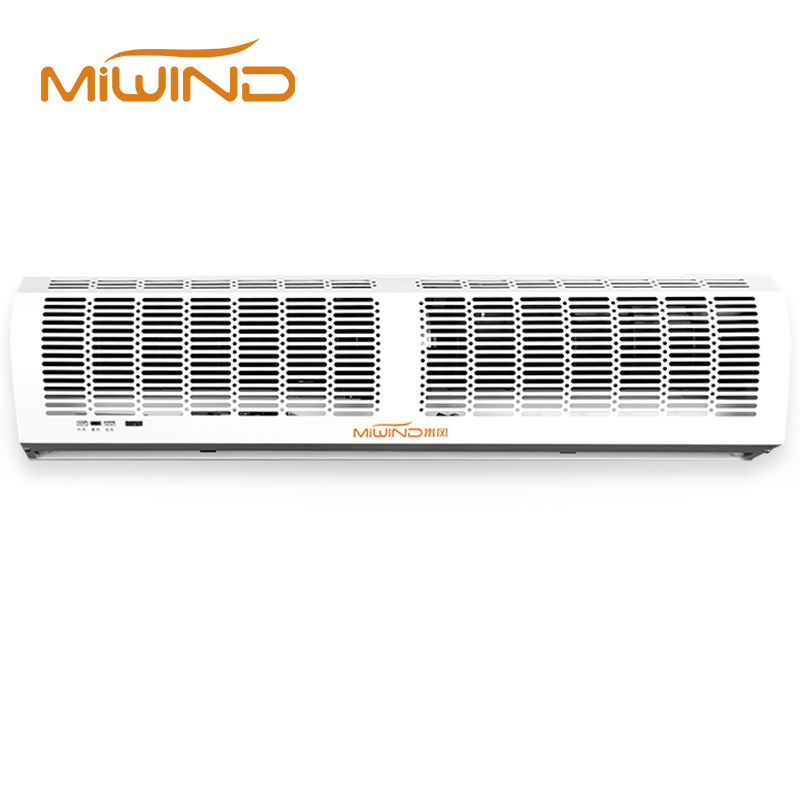
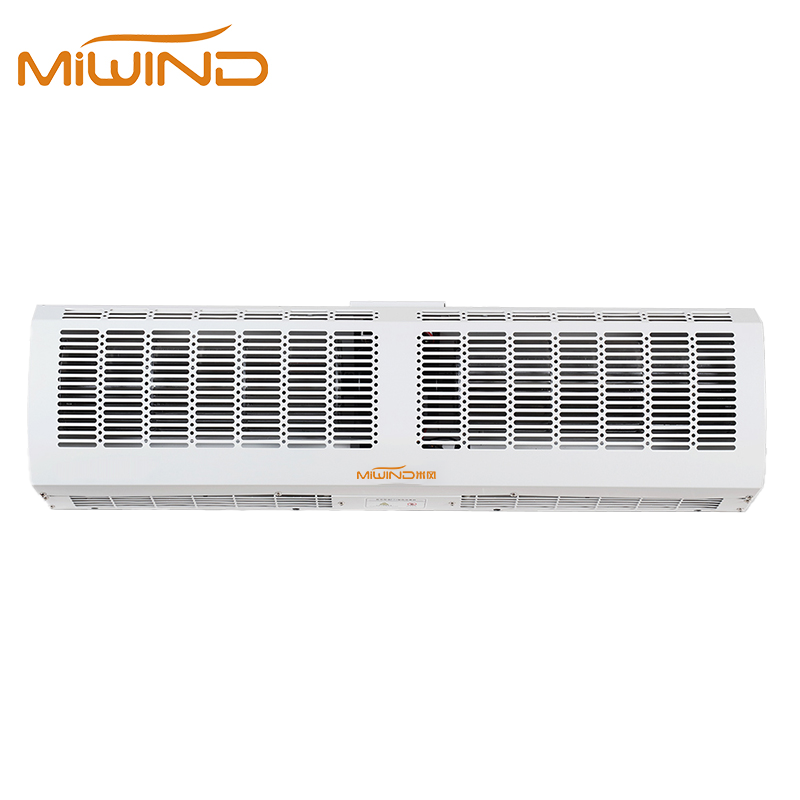
| Customer entrance with discomfort during frequent door cycles | Air Curtain products | Opening size, mounting height, door type, traffic period, indoor/outdoor conditions |
| Entrance type is still uncertain, or several stores use different door heights and traffic levels | Air Curtain Series | Opening schedule, preferred appearance, voltage, control needs, document requirements |
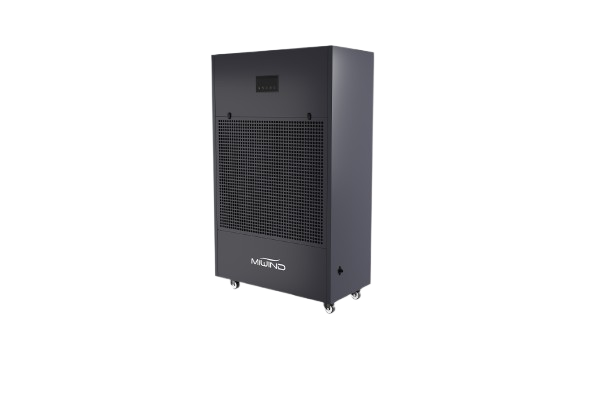
| Indoor RH remains high away from the door, or moisture affects storage, back rooms, or cold transition zones | Industrial Dehumidifier and Industrial Dehumidifier Series | Space size, target RH, moisture source, operation schedule, drainage and power notes |
A humid convenience store entrance, a hotel lobby, a mall doorway, and a receiving door may not belong to the same product review. The product route becomes clearer when the buyer separates the doorway complaint from the wider humidity condition.
The strongest inquiry is therefore not a single sentence. It is a short project note: "This is the opening, this is the moisture symptom, this is when it happens, this is the surrounding HVAC and pressure condition, and these are the photos." That gives MIWIND enough context to review both airflow and moisture-control paths without pretending one product can do every job.
How to Avoid Misdiagnosing the Entrance
Humid entrance symptoms often share causes with other entrance problems. Use these related guides before finalizing the inquiry:
- If the team has not measured the opening, use How to Measure a Commercial Entrance for an Air Curtain Quote.
- If an automatic sliding door opens constantly during business hours, read Air Curtains for Automatic Sliding Doors.
- If air seems to rush inward even on calm days, review Air Curtains in Negative-Pressure Buildings.
- If the entrance faces direct wind or a coastal street, check Wind-Exposed Entrances.
These links matter because humid symptoms can come from several causes at once. A wet threshold could be rain carry-in. Fog could be a temperature and vapor-pressure issue. Rust could be coastal exposure, cleaning practice, or finish selection. A weak air stream at the floor could be mounting height, wind, pressure, or product mismatch.
Inquiry Data to Submit
Review available technical downloads, then use the contact form or inquiry modal to request a humid-climate entrance review. Include:
| RFQ field | Recommended detail |
|---|---|
| Opening data | Width, height, mounting height, door type, header space. |
| Traffic | Opening frequency, held-open periods, peak business hours. |
| Climate | Outdoor and indoor temperature/RH, dew point if available. |
| Moisture symptoms | Photos of condensation, wet floor, fog, rust, or stains. |
| Building conditions | Exhaust, make-up air, negative pressure, adjacent open doors. |
| Coastal exposure | Distance from coast if known, direct wind/rain, canopy, cleaning conditions. |
| Product preferences | Ambient, heated, crossflow, centrifugal, or unknown. |
| Documentation | Voltage, certificates, catalog, installation references, export documents. |
The answer may be an air curtain recommendation, an industrial dehumidifier discussion, or a request for more site data. That is a healthy result. Humid entrance problems are system problems, and the best early-stage RFQ makes the system visible.
FAQ
Does an air curtain remove humidity from a commercial entrance?
No. An air curtain can reduce air exchange through an opening, but it does not remove moisture from indoor air or lower dew point. Persistent RH problems should be reviewed with HVAC, sealing, drainage, and dehumidification.
Why can condensation appear even when an air curtain is running?
Condensation can appear when moist air contacts a surface below its dew point. Door cycles, cold frames, wind, negative pressure, and indoor moisture sources can all contribute. The air curtain may still be helping reduce exchange, but another moisture source or surface-temperature issue may remain.
Is dew point more useful than relative humidity for entrance moisture risk?
For condensation review, dew point is often more useful because it shows how much moisture is in the air at a given condition. Relative humidity alone can be misleading when temperatures vary around glass, metal, floors, and cold-zone boundaries.
Should a humid coastal entrance use an air curtain, a dehumidifier, or both?
It depends on where the moisture comes from. If the problem happens during door opening, an air curtain may help reduce exchange. If the whole space remains humid, industrial dehumidifier support may be needed. Many difficult sites require both airflow separation and moisture control.
Can an air curtain prevent corrosion in coastal buildings?
It should not be specified as a corrosion-prevention device. Coastal projects should review cabinet finish, fasteners, electrical protection, installation exposure, cleaning practice, and maintenance access before confirming a product route.
Next Step
Request a humid-climate entrance review through Contact Us. Send doorway dimensions, climate data, condensation photos, door-cycle notes, and indoor humidity targets so MIWIND can review the air curtain and moisture-control path together.