Electric, Hot-Water and Steam Air Curtains: Heat-Source Choice
Compare air curtain heat sources by electrical capacity, hot-water conditions, steam compatibility, freeze protection and the required fan-and-heat sequence.
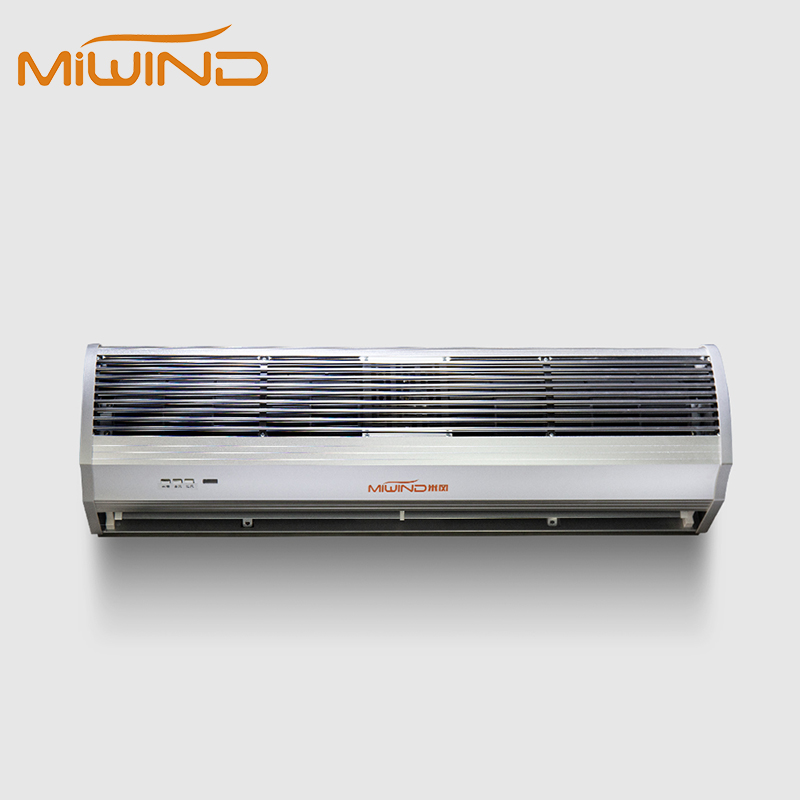
Choose an air curtain heat source from the utilities available at the entrance and the documented heating-coil or electrical design. Electric, hot-water and steam systems have different supply, control and maintenance requirements. An ambient air curtain adds no heat; all options still need suitable doorway coverage, mounting and airflow.
Compare the heat source after documenting the doorway and comfort requirement. Send the available electrical service or heating-system conditions with the opening dimensions so the supplier can assess a compatible configuration.
Heat Source Selection Is Not Cold-Air Basics
Many buyers ask for a heated air curtain because people feel cold air at the doorway. That symptom is real, but the heat source is only one part of the answer. A unit can provide warm discharge air and still underperform if it is too short for the opening, mounted too high for its effective range, blocked by a door operator, or fighting strong negative pressure.
AMCA's air curtain technology material frames air curtains as doorway air streams that reduce air exchange across openings. ANSI/AMCA 220 is an aerodynamic performance rating standard, not a heating-system selection manual. That distinction matters. Heat-source choice should be layered on top of the doorway airflow decision, not used to bypass it.
Use this mental split:
| Question | Main decision |
|---|---|
| Can the air stream cover the opening? | Product family, width, mounting height, velocity, and discharge path |
| Does the entrance need warmer discharge air? | Ambient, electric, hot-water, steam-related, or other heated option |
| Can the building support that heat source? | Electrical capacity, hydronic piping, steam availability, controls, safety, and maintenance |
| Will controls match door behavior? | Door switch, timer, continuous run, temperature control, or BMS coordination |
Ambient vs Heated Air Curtains
An ambient or unheated air curtain uses room-temperature air. It can be appropriate when the project mainly wants environmental separation, dust reduction, insect reduction, or conditioned-air retention without adding heat at the doorway. Warm climates, air-conditioned retail buildings, and internal separation openings often begin with the ambient path.
A heated air curtain adds thermal comfort near the opening. It can be useful at winter entrances, customer-facing doors in cold regions, personnel doors, lobbies, and facilities where workers stand near the doorway. The heat does not create the air barrier by itself. It changes the temperature of the discharge air so the moving stream feels more acceptable.
That is why buyers should not say, "the door feels cold, so choose the largest heater." They should say, "this entrance needs air separation, but the discharge air must also be comfortable in winter."
Electric, Hot Water, and Steam Compared
Different manufacturers commonly offer heated air curtains with electric, hot-water, steam, gas, or indirect-gas options. For MIWIND planning, keep the comparison centered on the project utilities and verified product data.
| Heat-source path | When it may fit | Data to confirm |
|---|---|---|
| Ambient or unheated | Warm climates, air-conditioned entrances, internal openings, or applications where comfort heat is not needed | Door size, mounting height, purpose, traffic, controls |
| Electric heat | Projects with available electrical capacity and no convenient hydronic line at the doorway | Voltage, phase, heater capacity, breaker/load limits, control sequence |
| Hot-water/hydronic heat | Buildings with hot-water heating infrastructure near the entrance | Water temperature, flow, pressure drop, valve/control package, freeze risk |
| Steam-related heat | Facilities that already use steam and can safely bring a verified steam/hydronic solution to the entrance | Steam or heat-exchanger design, pressure, condensate, controls, safety, maintenance |
The procurement rule is simple: choose the heat source the building can actually support. Mars Air's options guidance gives the same practical idea from a competitor perspective: businesses often start with the heating option already used in the building, then change only if the entrance cannot access that source. Powered Aire's support material similarly describes electric, hot water, steam, and indirect gas as heat options that supplement the building's primary heat.
When Electric Heat Fits
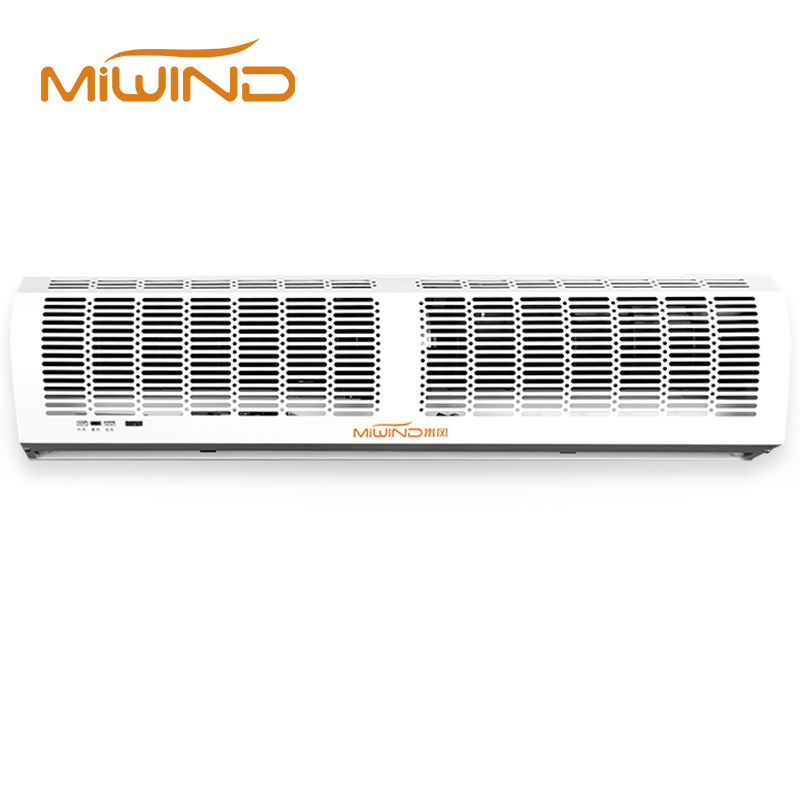
MIWIND's Heated A5 series provides an electric-heating product path. Confirm the exact model's heater input, voltage, phase, control sequence, installation instructions and protective requirements from its current documents before procurement.
Electric heat can fit:
- Retail entrances without hot-water piping at the door.
- Small to medium commercial doors where electrical capacity is available.
- Retrofit projects where adding hydronic piping would be too invasive.
- Projects that want straightforward on/off or temperature-linked control.
The buyer still needs to confirm voltage, phase, electrical load, control method, and local electrical requirements. A heated air curtain should not be selected from product length alone.
When Hot Water or Steam Fits
For a hot-water project, review the plumbing heating air curtain with the available water temperatures, flow, pressure and installation location. Confirm coil performance, valves, controls, condensate exposure and freeze protection. A hot-water coil must not be assumed suitable for direct steam.
Steam-related projects need even more caution. A facility may have a boiler, but the entrance may not have a suitable steam line, condensate path, pressure condition, or maintenance access. If a buyer asks for a steam heated air curtain, the RFQ should describe the actual system and ask MIWIND to confirm the feasible product path. Do not assume "boiler present" equals "steam air curtain ready."
Controls and Safety Boundaries
Heated units need control clarity. The project may need fan-only mode, heat mode, thermostat control, door-linked operation, delay timers, overheat protection, or building automation coordination. These decisions affect comfort, energy use, product selection, and documentation.
Controls cannot fix a wrong heat source. A smart controller cannot create electrical capacity, hydronic piping, or steam safety where the building does not have it. Likewise, a large heater cannot compensate for an air stream that does not reach the floor or a building that is strongly negative.
For code-related vestibule or doorway discussions, reference the locally adopted energy code and project requirements. Some energy-code training materials discuss air curtains in vestibule-exception contexts, but local adoption and review still govern the project.

RFQ Data to Send MIWIND
Prepare these details before requesting a heated air curtain quote:
- Clear opening width and height.
- Proposed mounting or discharge height.
- Door type and opening frequency.
- Primary goal: comfort heat, cold draft reduction, environmental separation, insect control, or mixed purpose.
- Climate and winter design conditions if available.
- Available electrical service: voltage, phase, breaker/load limits.
- Available hydronic data: water temperature, flow, pressure, pipe location, valve requirements.
- Steam-related data if applicable: pressure, condensate, safety requirements, and whether a heat exchanger is expected.
- Control preference: door switch, thermostat, timer, remote, continuous run, or BMS coordination.
- Required documents: catalogue, wiring diagram, installation guide, technical data, certificates.
The more precise the heat-source data, the less likely the quote will drift into a generic heated model recommendation.
MIWIND Heated Product and Document Path
Start with heated air curtain products when the project needs warmer discharge air near a commercial entrance. Use the Air Curtain Series when the buyer is still comparing crossflow, centrifugal, heated, and industrial options.
Use technical resources and the download center when the purchasing team needs catalogues or project documents. For project-specific review, send the heat-source data through the MIWIND contact page. For broader building use cases, the solutions path can help frame cold-region and entrance comfort applications.
Related Entrance Guides
If the entrance dimensions are not ready, read How to Measure a Commercial Entrance Before Requesting an Air Curtain Quote.
If the heated unit is part of a vestibule discussion, read Air Curtain vs Vestibule for Commercial Entrances.
If the buyer needs door-linked operation, read Door Switch, Timer, BMS, or Continuous Run.
FAQ
Is a heated air curtain a space heater?
No. It can temper the doorway air stream and improve comfort near the entrance, but it should not be treated as the main heating source for the building.
Which heat source should I choose?
Start with the utilities available near the doorway: electrical capacity, hot-water piping, steam-related infrastructure, or no heat requirement. Then check product data and controls.
When is ambient air enough?
Ambient air may be enough when the project does not need warmer discharge air, such as warm climates, internal openings, or air-conditioned entrances focused on separation rather than heat.
What power or hydronic data is needed?
For electric heat, provide voltage, phase, and load limits. For hot water, provide water temperature, flow, pipe location, pressure drop expectations, and valve/control needs. For steam-related projects, provide steam and condensate details.
Can heated air solve cold drafts by itself?
Not always. Cold drafts can also come from poor coverage, incorrect mounting, wind, negative pressure, or frequent door opening. The air stream and the building condition still need review.
Should I request steam if the building has a boiler?
Not automatically. The entrance must have a feasible and safe heating path, controls, maintenance access, and confirmed product compatibility.
Compare Heated Options
Use the MIWIND contact page to send doorway dimensions, winter comfort goals, available power or hydronic data, and control expectations. MIWIND can help compare ambient, electric, hot-water, or project-specific heated options before quotation.